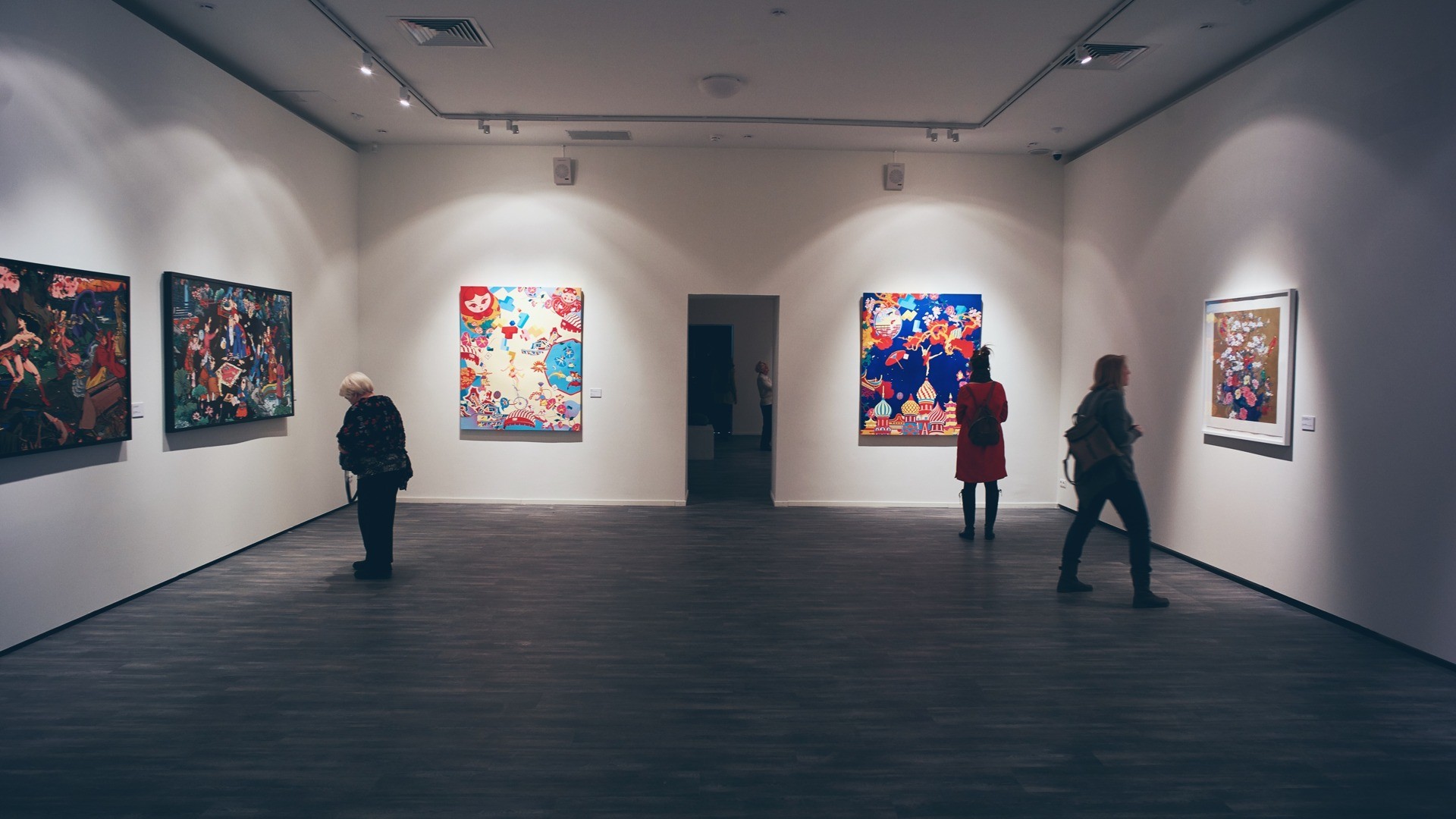
Fly Me to the Moon — Jacky Tsai’s Moscow Museum Debut
A major solo exhibition at MMOMA · 13 February–11 March 2018
13th Feb 2018
Moscow
In February 2018, the Moscow Museum of Modern Art presented Fly Me to the Moon, Jacky Tsai’s first solo exhibition in Russia. Bringing together paintings, lacquer carvings, prints and moving images, the exhibition offered a broad introduction to an artistic practice shaped by the meeting of cultures — and marked a significant museum presentation in Tsai’s career.
Following an opening evening on 12 February, the exhibition welcomed the public from 13 February to 11 March at MMOMA’s Gogolevsky Boulevard venue. Alongside Tsai’s Chinese New Year installations at GUM on Red Square, it formed a substantial Moscow presentation spanning the museum, public space and the city’s cultural programme.
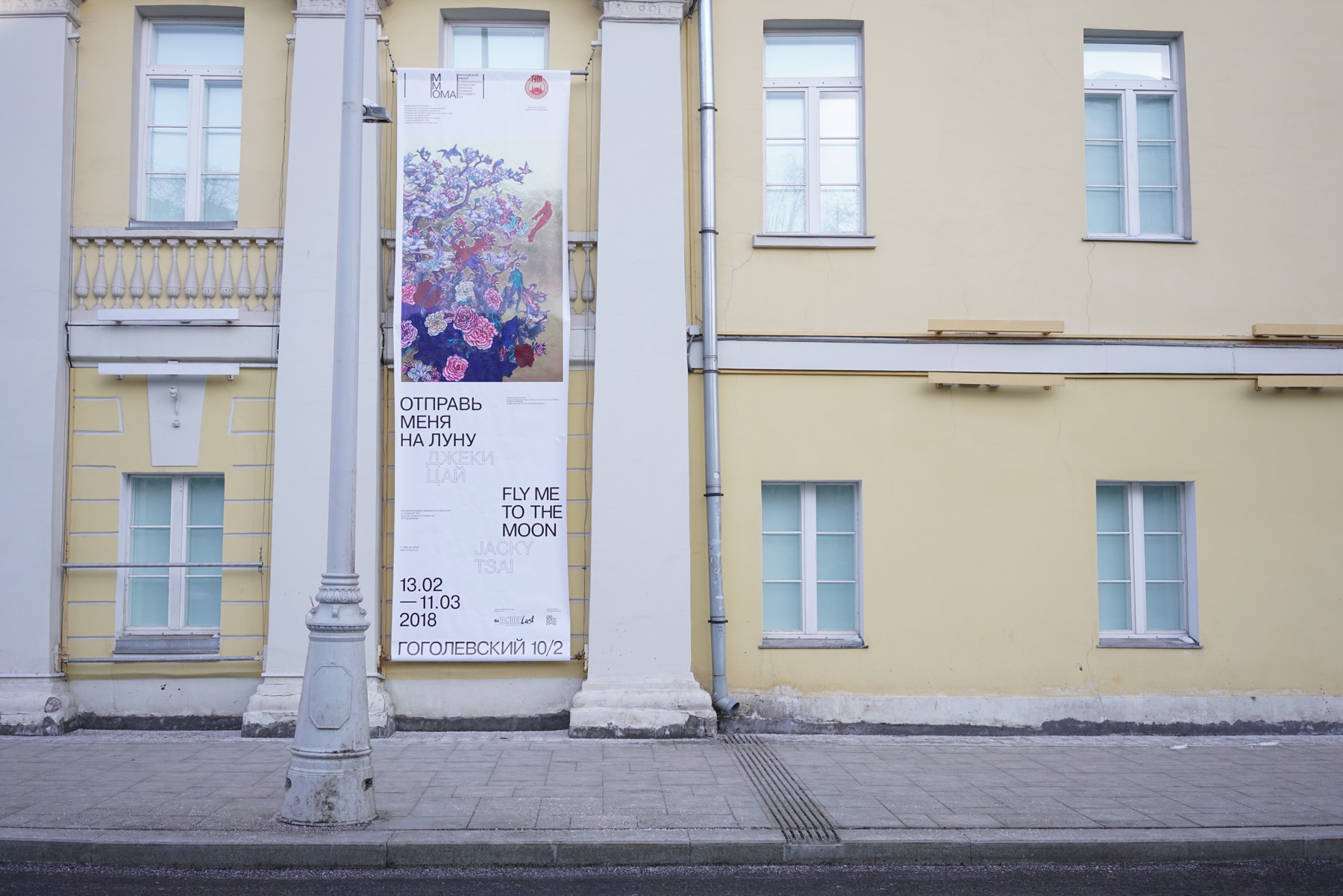
The exhibition banner on MMOMA’s Gogolevsky Boulevard façade.
A wider view of the artist
Fly Me to the Moon brought several years of work into dialogue, allowing audiences to encounter the range of Tsai’s practice beyond the floral skull for which he had first become widely known. Familiar figures from Western popular culture appeared within Chinese pictorial worlds; traditional processes gave contemporary imagery a different texture, pace and physical presence.
The presentation moved between themes of East and West, human nature, beauty and decay, and the relationship between past and future. Rather than treating cultural exchange as a simple harmony of symbols, the works opened up encounters that could be playful, unexpected or unsettling.
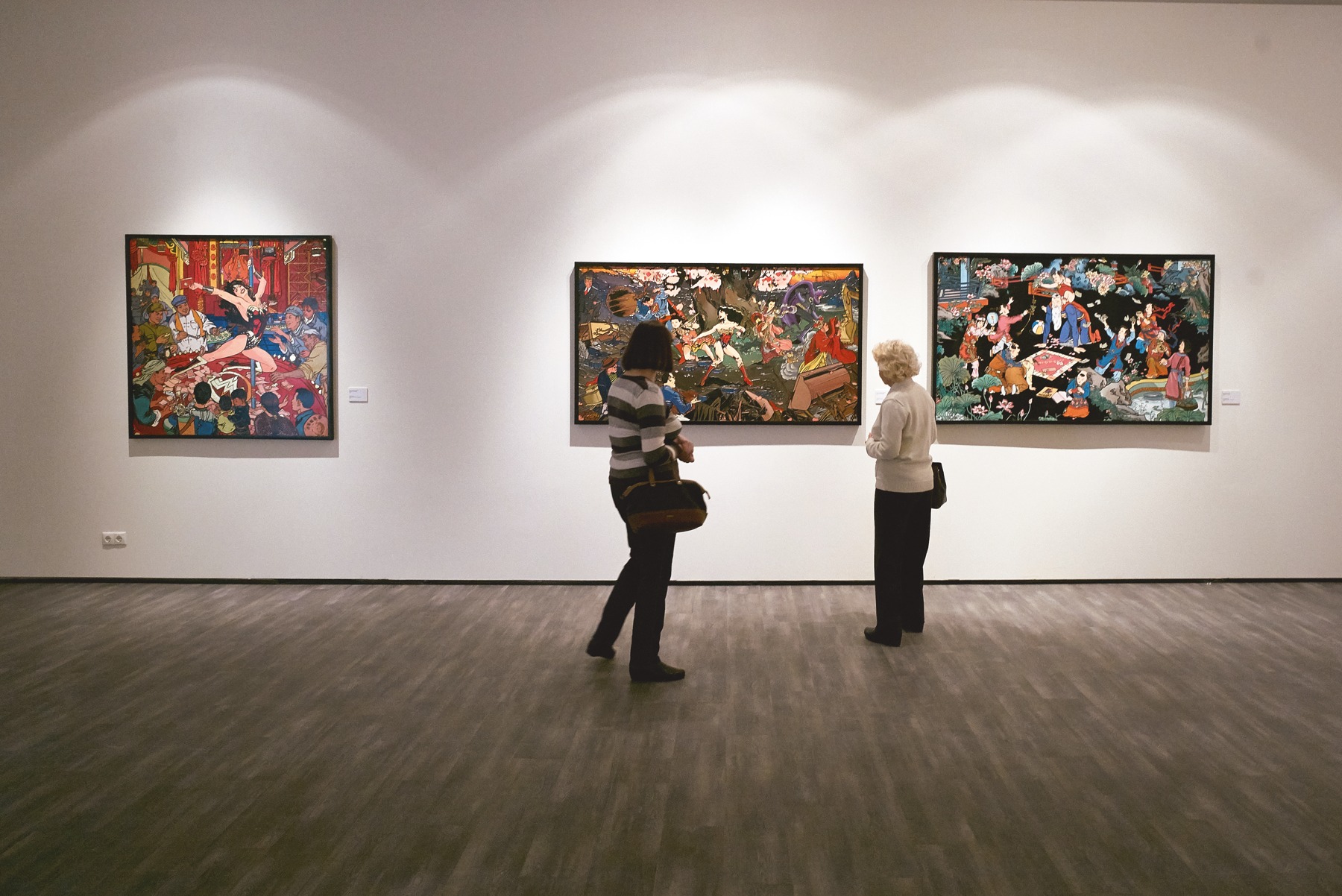
Visitors in the exhibition galleries, with Tsai’s works installed in conversation across the walls.
Traditional craft, contemporary imagination
Lacquer carving was central to this dialogue. Superheroes and figures drawn from Chinese visual traditions shared intricately worked surfaces, bringing the language of contemporary popular imagery into a medium rooted in historical craftsmanship. Seen in the gallery, these works invited both an immediate reading of their narratives and a closer examination of their material detail.
The exhibition also traced the relationship between unique works and editions. Eyestorm’s contemporary account records lacquer carvings and canvases alongside screenprints and lenticular works, including The Revival, Puppets and Chinese Floral Skull Lenticular. The different media made clear that Tsai’s imagery could be reimagined through several distinct ways of making and seeing.
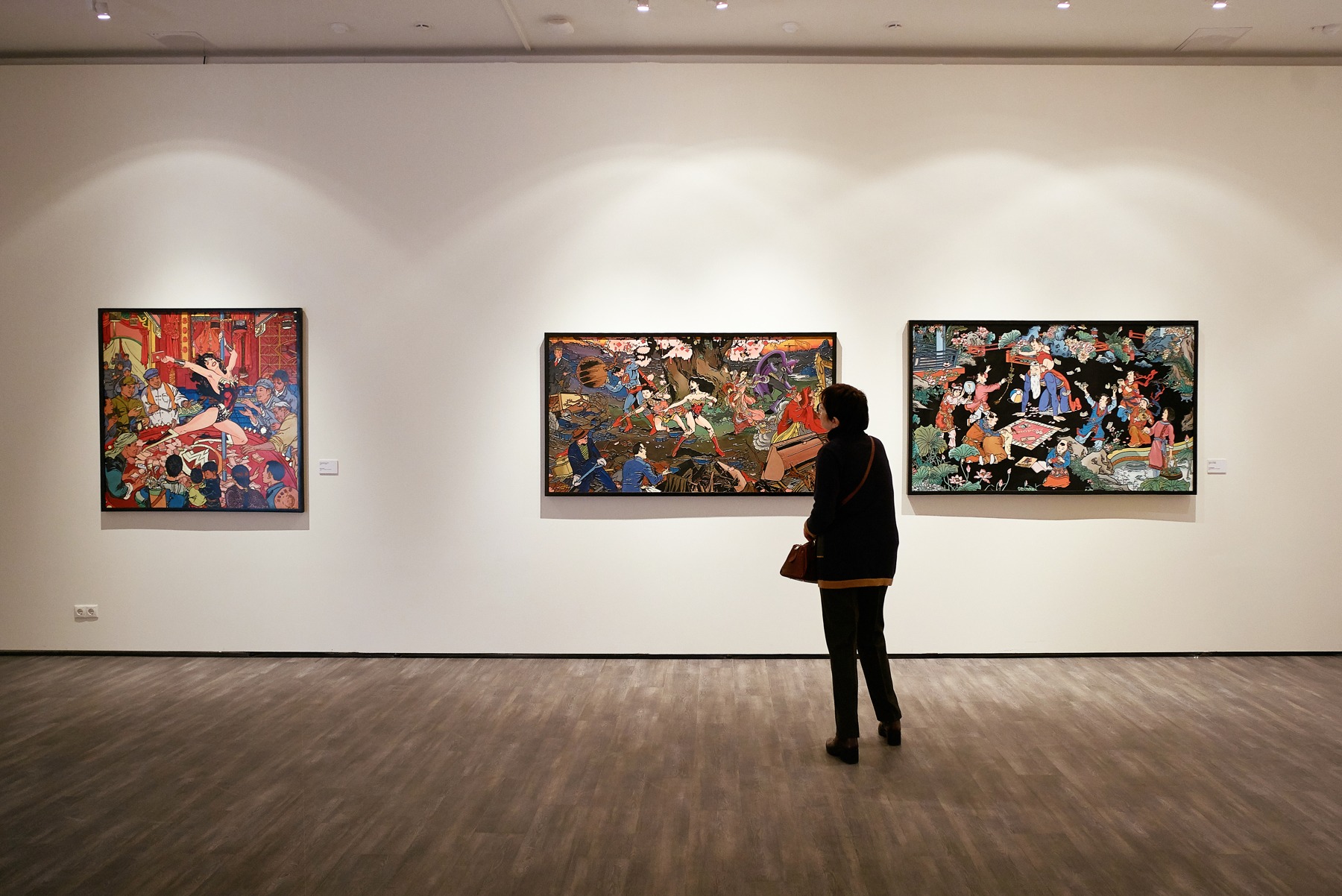
A moment of close looking in the MMOMA galleries.
Painting at an immersive scale
The expansive Shanghai Tang Café became a focal point of the exhibition. Its densely populated scene drew viewers into a world of layered references, while its scale changed the encounter from looking at an image to entering a visual environment. Installation photographs preserve the relationship between the work, the gallery and the people moving through it.
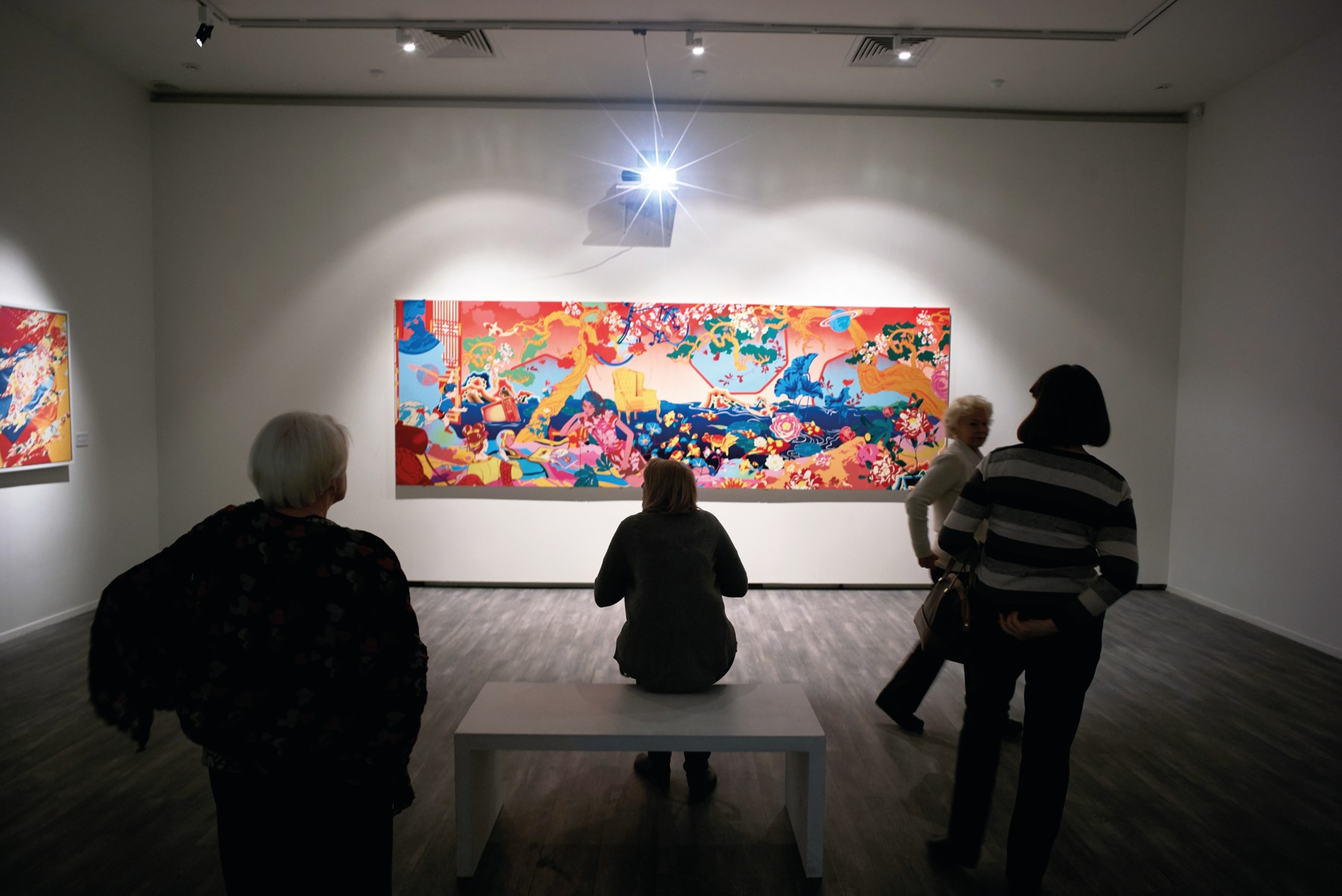
Visitors gathered before Shanghai Tang Café.
A conversation with Russia
The Moscow presentation also introduced new works responding to Russian culture. Ballerina and Acrobat brought ballet, the architecture of Saint Basil’s Cathedral and the imagery of the Russian doll into Tsai’s visual vocabulary. These paintings connected the museum exhibition with the ideas developed for his installations at GUM.
In his contemporary interview with Esquire Russia, Tsai described his admiration for Ilya Repin and Valentin Serov, and reflected on the influence of the Russian and Soviet painting tradition on his early training in China. Moscow therefore offered a particularly meaningful setting: an opportunity to bring his evolving work into conversation with a culture that had already helped shape his artistic education.
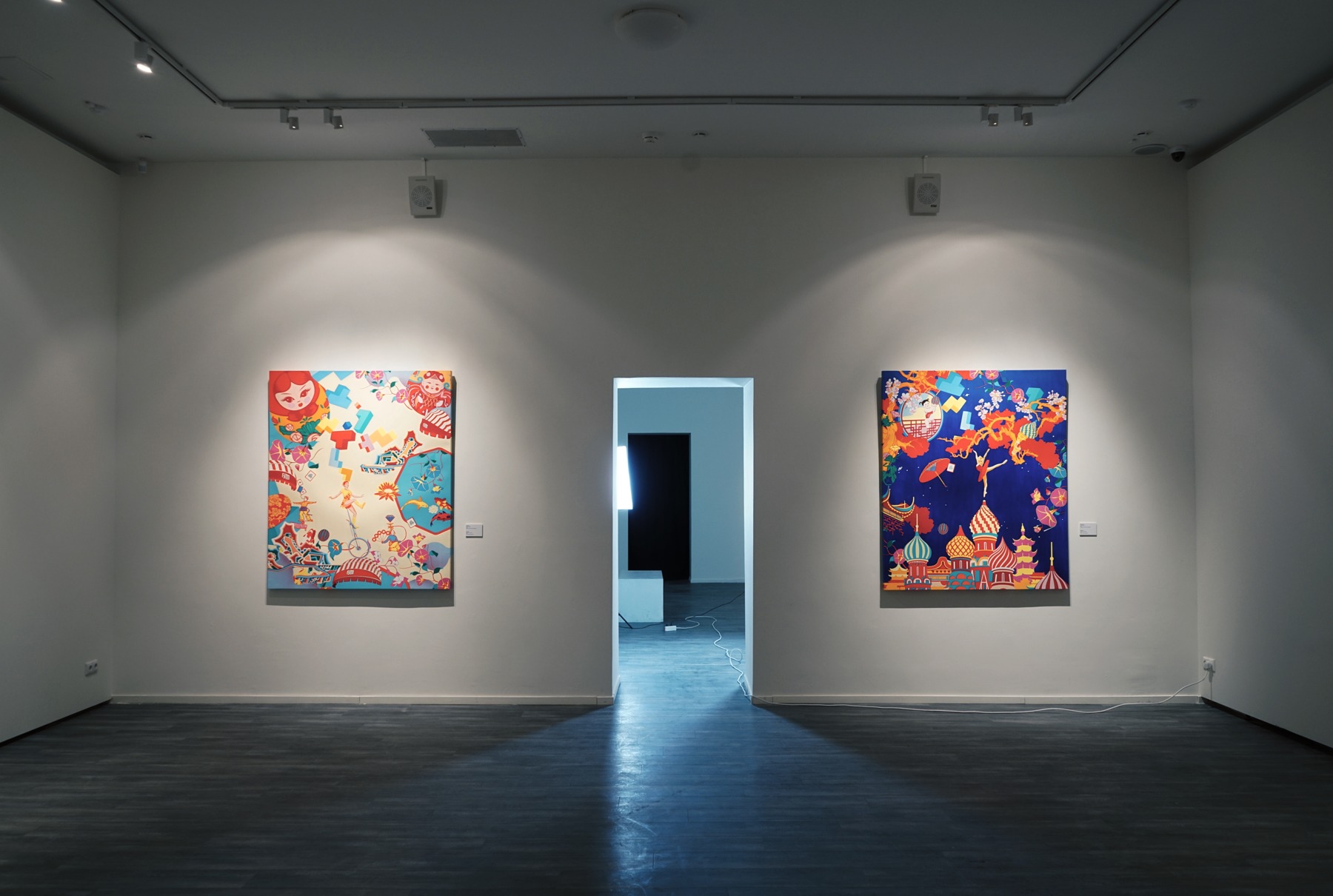
New paintings developed for the Moscow project, installed at MMOMA.
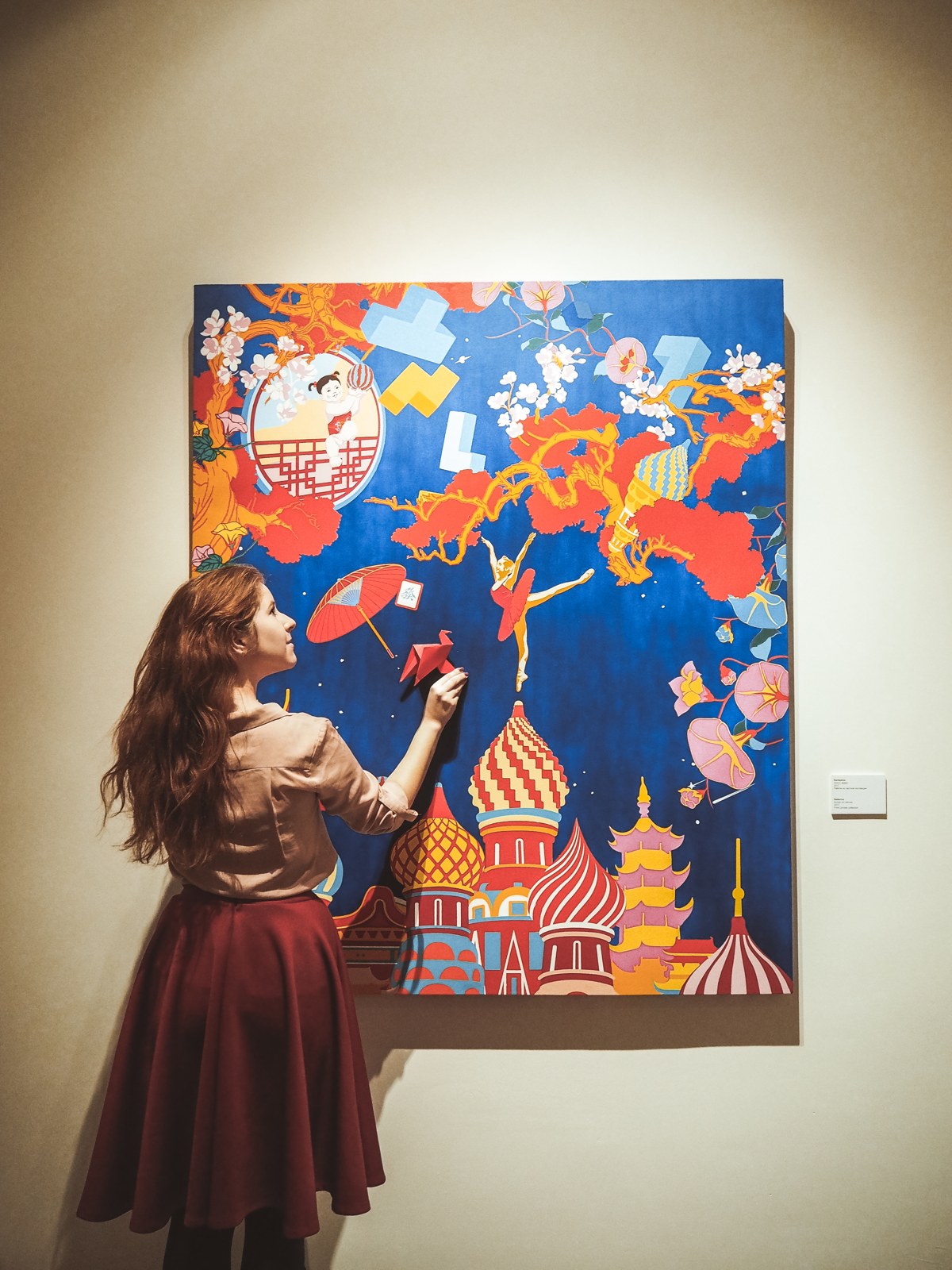
An encounter with the Russian imagery within Tsai’s painting.
Beyond the still image
A projected moving-image work extended the exhibition’s visual language beyond the framed surface. Its changing forms introduced another rhythm into the galleries, connecting the artist’s detailed pictorial worlds with animation and the experience of time.
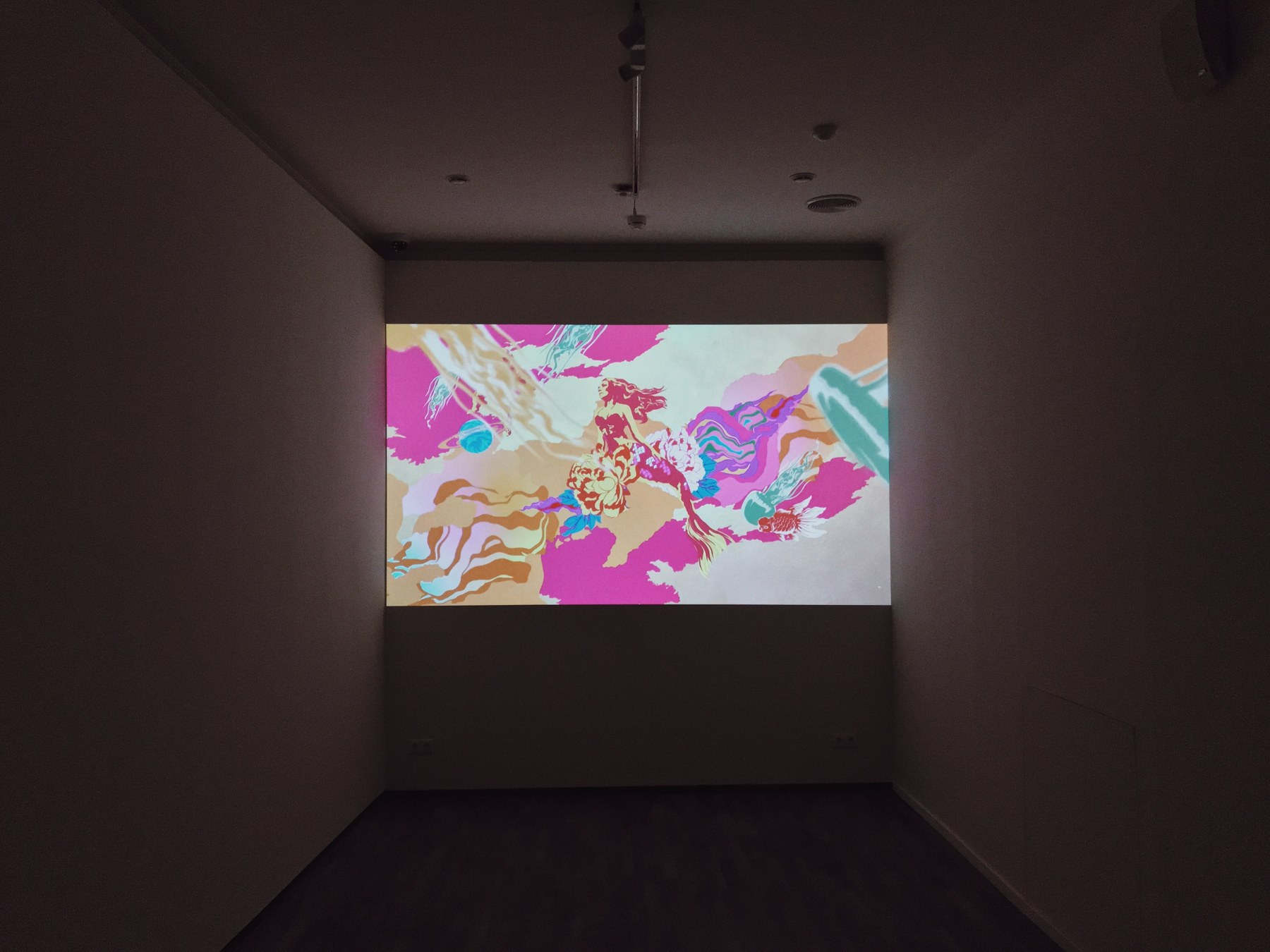
Moving images within the exhibition.
A lasting record
The project contributed to MMOMA’s programme of cultural exchange with China. It also generated a substantial record of interviews and coverage in the Russian press, now gathered in the separate Moscow media archive.
The bilingual publication Fly Me to the Moon documented the works, studio techniques and the presentations at MMOMA and GUM, with texts and an artist interview in English and Russian. Together with the photographs, it preserves a Moscow project in which museum exhibition, public art and cultural dialogue became closely connected.
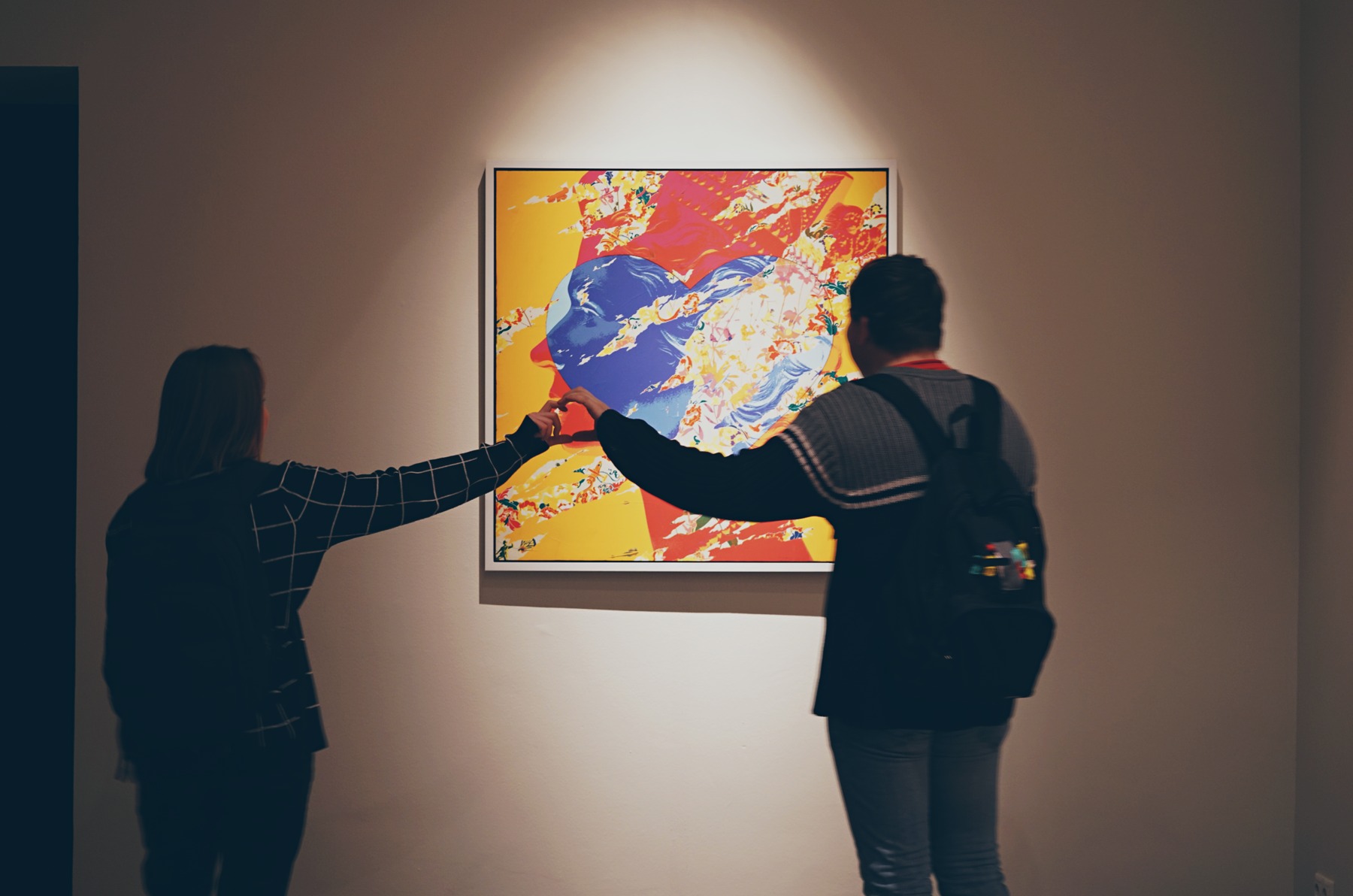
Visitors share a moment in front of Tsai’s work at MMOMA.
Explore the exhibition
The GUM Chinese New Year installations
The Sotheby’s charity auction in support of MMOMA