
Fly Me to the Moon, Moscow
Moscow Museum of Modern Art (MMOMA)
09th Apr 2018
13 February–11 March 2018 · Moscow Museum of Modern Art · Gogolevsky Boulevard, Moscow
Fly Me to the Moon was Jacky Tsai’s first solo exhibition in Russia, bringing together several years of paintings, lacquer carvings, screenprints, lenticular works and moving images. The museum presentation invited audiences to explore an artistic language in which traditional Chinese craftsmanship meets Western popular culture, and humour opens onto questions of identity, history and cultural exchange.
The exhibition opened with a private view on 12 February and was presented in partnership with GUM as part of Moscow’s Chinese New Year programme. Within the galleries, Tsai’s richly worked surfaces and layered narratives offered a more intimate encounter with the ideas that also informed his public installations on Red Square.
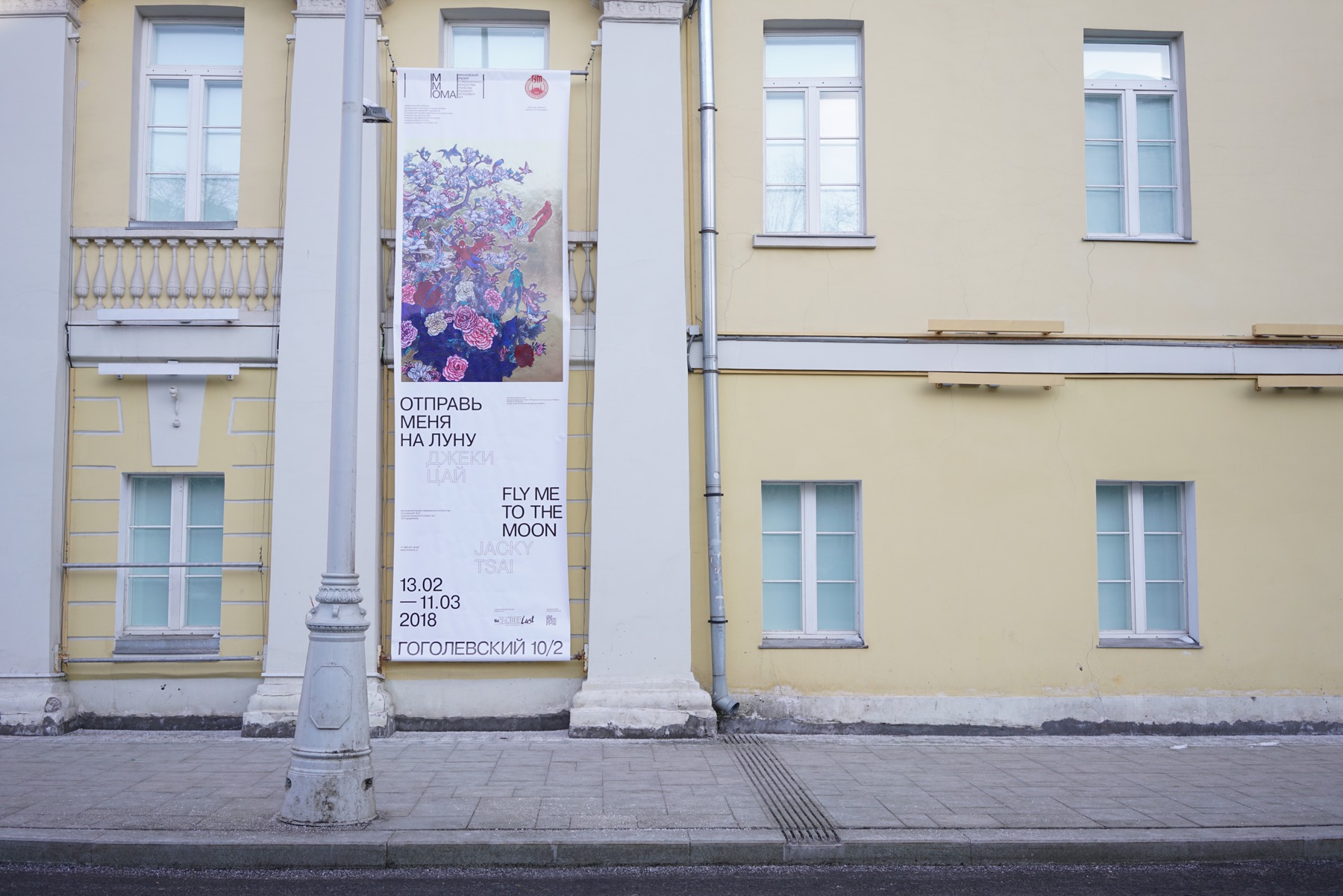
The exhibition banner outside MMOMA, 2018.
New works for Moscow
For the Moscow project, Tsai developed paintings that drew Russian imagery into his established visual worlds. Ballerina and Acrobat bring together ballet, the architecture of Saint Basil’s Cathedral, Russian dolls and Chinese pictorial traditions. These works establish a conversation between the museum presentation and the large-scale installations at GUM.

Ballerina, 2018.
The title work: Fly Me to the Moon
The exhibition took its title from Tsai’s 2014 work Fly Me to the Moon, one of his early experiments with bringing Western popular icons into the traditional Chinese technique of lacquer carving. Its imagery draws on Yutang Fugui Tu, a decorative pictorial tradition associated with prosperity, wealth and happiness. The meeting of familiar figures and historical forms introduces a recurring question in Tsai’s practice: how can an inherited visual language carry new stories?

Fly Me to the Moon (Gold), 2017 — screenprint with gold leaf.
Through the exhibition
The presentation explored four connected themes in Tsai’s practice:
East and West
Superheroes enter Chinese landscapes and narrative settings, unsettling familiar hierarchies and expectations. The encounters can suggest dialogue, rivalry or a reversal of roles rather than a single fixed relationship between cultures.
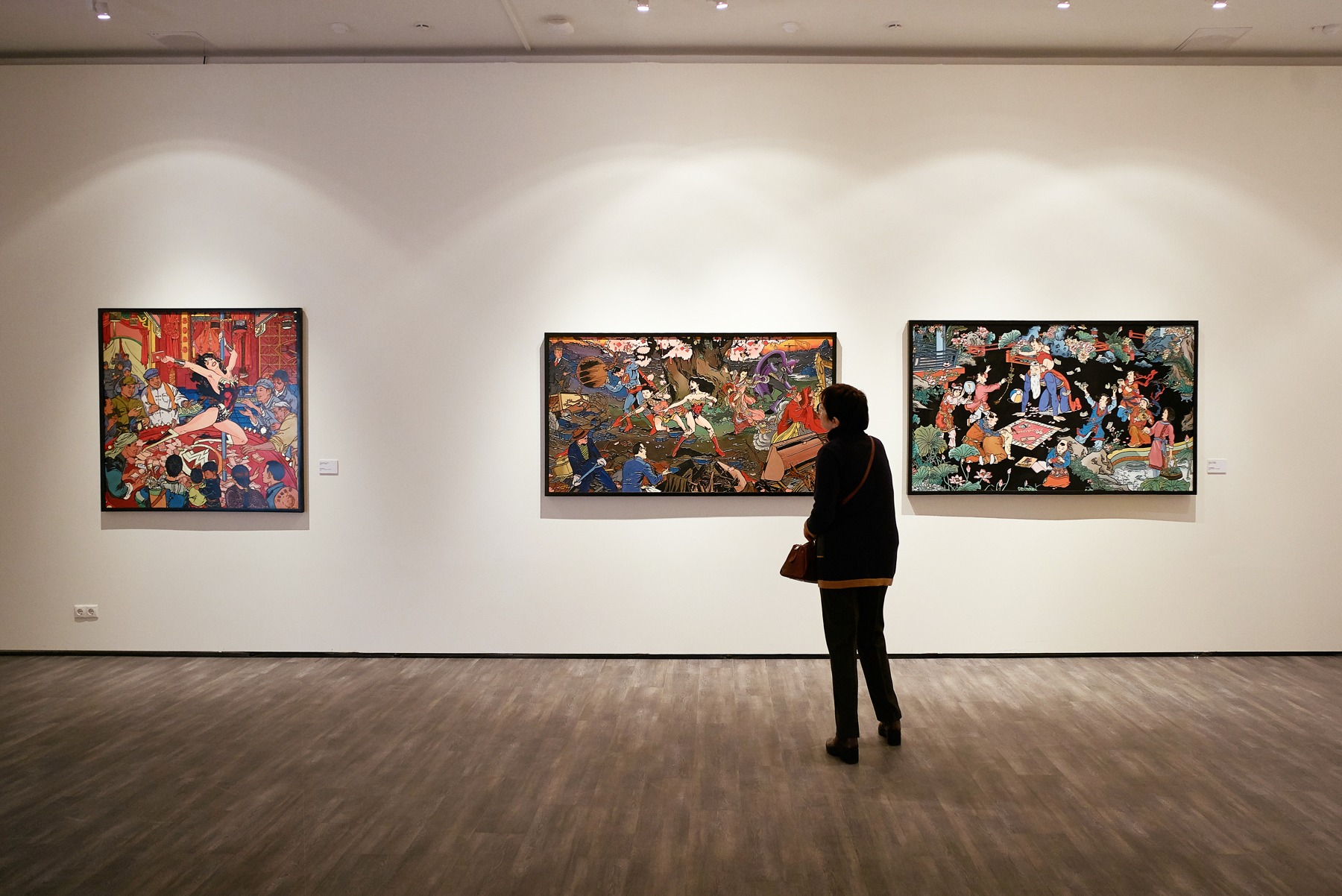
A visitor encounters Tsai’s cross-cultural narratives at MMOMA.
Human Nature
Through theatrical situations and familiar characters, Tsai examines desire, ambition, dependence and power. Humour offers an accessible point of entry into more complicated human relationships.

Destroy the Four Olds, 2014.
Beauty in Decay
Floral and skull imagery brings growth and mortality into the same visual field. The intricate ornament asks viewers to linger over forms that might otherwise provoke discomfort.
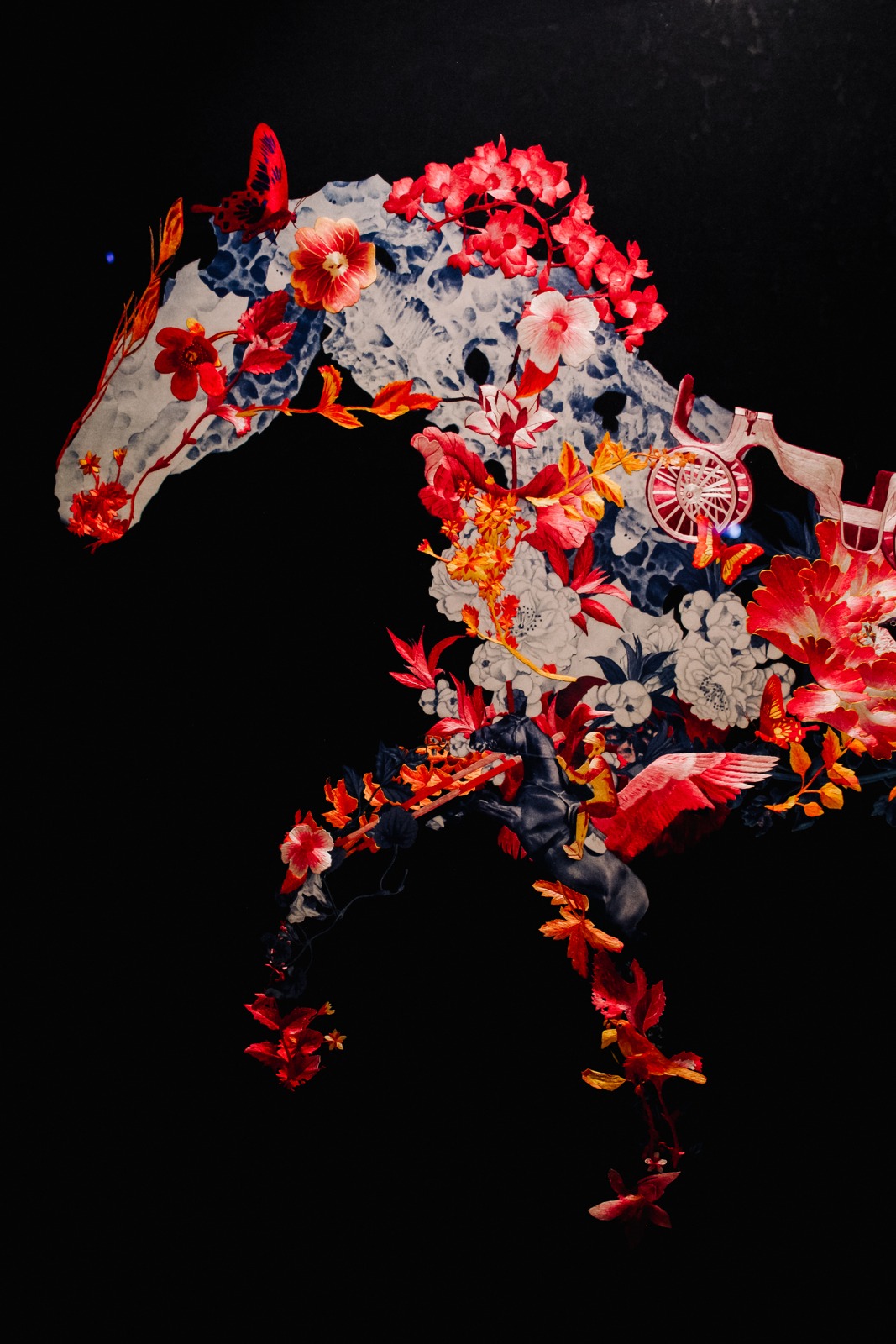
Floral imagery takes sculptural form in the MMOMA exhibition.
Future Past
Traditional processes and contemporary references coexist. Old and new become materials for imagining different futures rather than separate stages in a linear history.

Shanghai Tang Café — Eastern and Western characters share a pictorial world.
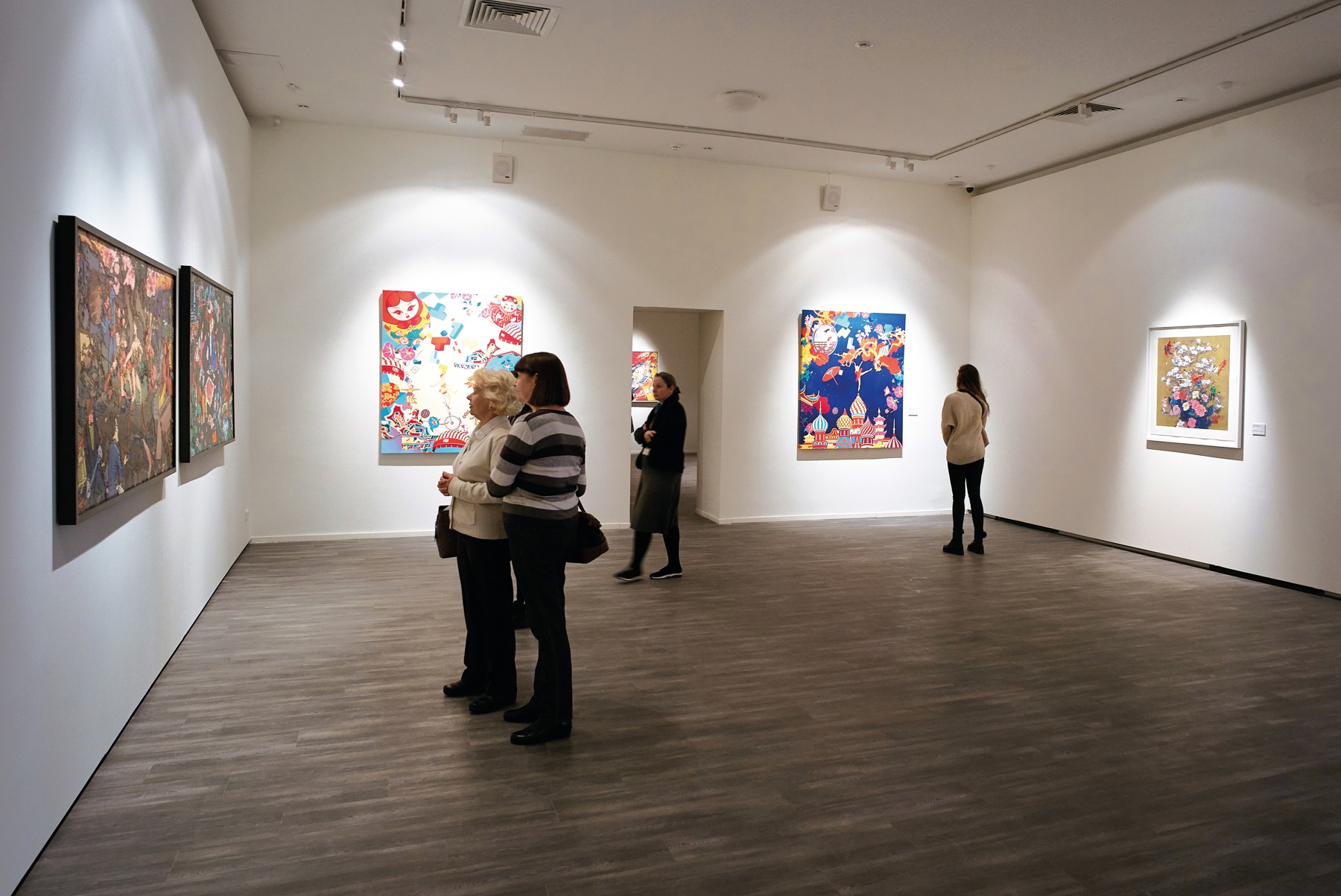
Visitors in the MMOMA galleries, 2018.
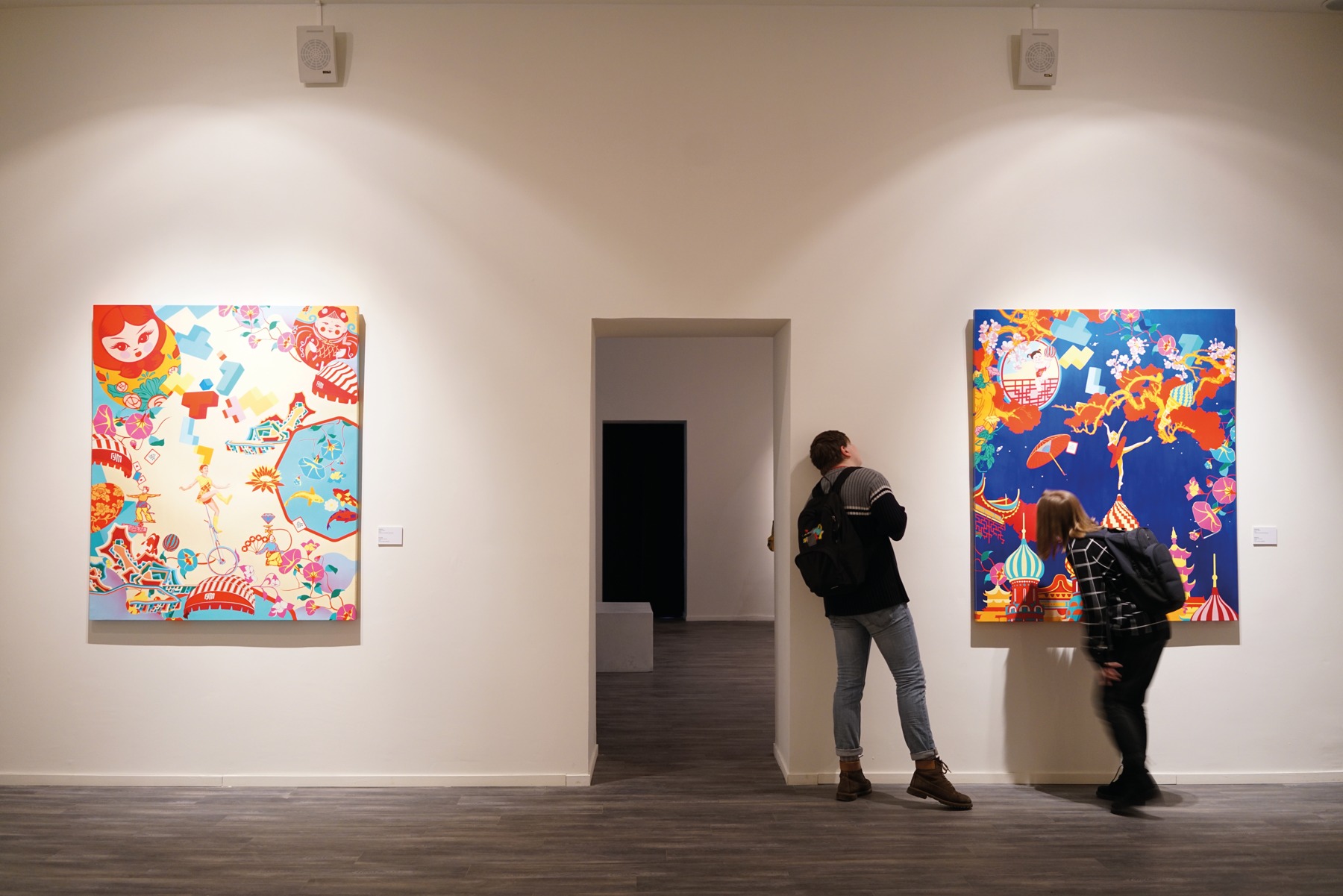
New works in dialogue with the MMOMA galleries, 2018.
Craft, surface and scale
Lacquer carving gives Tsai’s narratives a physical depth that changes with the viewer’s position and distance. Prints and lenticular editions offer other ways of encountering the same visual vocabulary, while the expansive Shanghai Tang Café brings a densely populated world into the scale of the gallery.
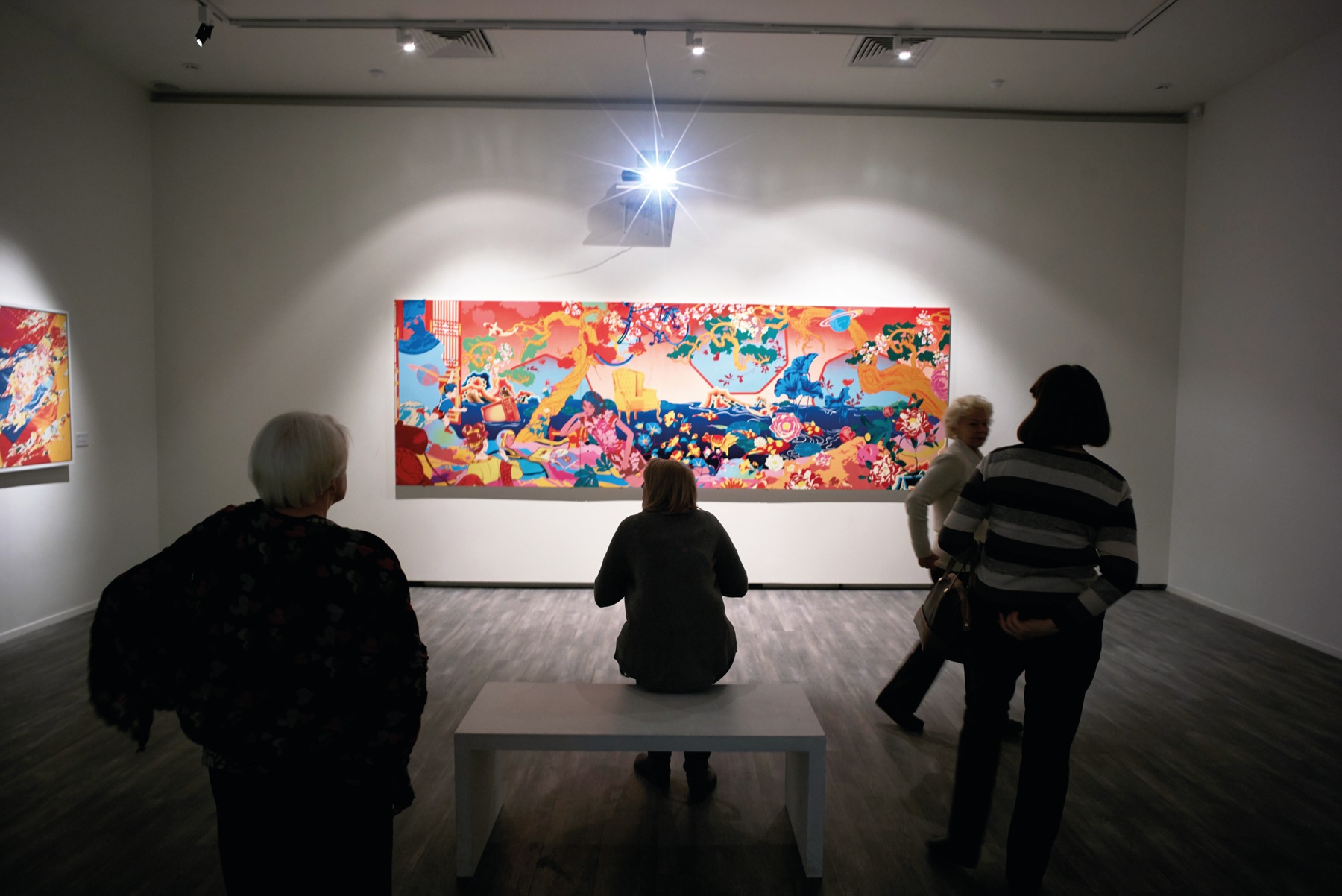
Visitors gathered before Shanghai Tang Café at MMOMA.
The photographic archive records both the installed works and the act of looking: visitors move between close examination of a surface and a wider reading of the scene. Sculpture adds another material presence, extending Tsai’s floral imagery beyond the painted or printed plane.
Painting in motion
A projected video work introduced moving forms into the exhibition. Its changing imagery extended the experience of Tsai’s paintings through time, inviting a visual journey through the artist’s pictorial world.
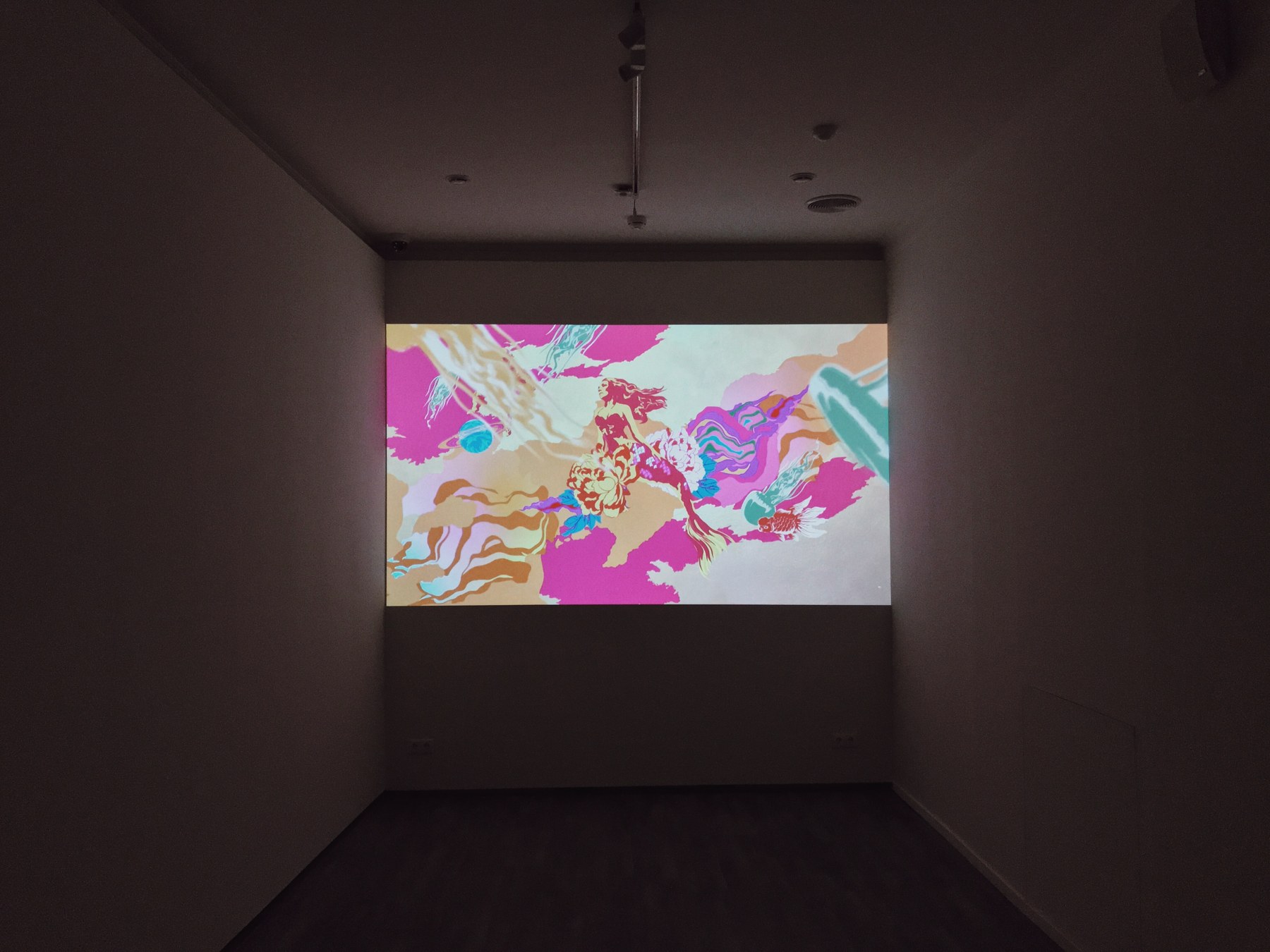
The moving-image presentation within the exhibition.
A cultural dialogue
The project formed part of MMOMA’s programme of cultural exchange with China. In contemporary interviews, Tsai also reflected on the influence of Russian painting on his early training and his admiration for Ilya Repin and Valentin Serov. The Moscow presentation brought that artistic background into conversation with the work he had developed in London.
'Jacky Tsai has made traditional Chinese crafts speak the universal language of contemporary art.' Vasili Zurabovich Tsereteli, Executive director of MMOMA said of the exhibition,
‘I hope that this would be the first of many exhibitions of Jacky Tsai to take place in Moscow Museum of Modern Art, and we will be able to host a major retrospective of the the artist in the future to present his diverse art.’
‘Fly Me To The Moon’ was held in partnership with renowned Moscow department store GUM as part of the ‘Happy Chinese New Year!’ festival, which displayed a number of large-scale installation works by Tsai to coincide with the museum show. Tsai created a series of impressive one-off sculptures for the store’s interior based on themes relevant in both Russian and Chinese culture.
Teymuraz Vladimirovich Guguberidze, managing director of GUM said: “On behalf of GUM and the art lovers I can say that it was an honour to officially present Jacky Tsai in Moscow. His bright and complex work has opened up a new connection between the two cultures. After long months of meticulous preparation, we have reached our ultimate goal, but most importantly we have cultivated the friendship between China and Russia through art and beauty.”
Publication: Fly Me to the Moon
The bilingual book Fly Me to the Moon preserves the wider Moscow project through completed artworks, studio techniques, installation photography and an interview with the artist. Texts in English and Russian connect the museum exhibition with the installations at GUM.
The 152-page hardback measures 33 × 28 cm and was produced in an edition of 500, with a cloth binding and lenticular cover — a physical extension of the exhibition’s interest in image, surface and changing perception.

Further reading
The Moscow museum debut — exhibition news
Moscow — television and press archive
The GUM Chinese New Year installations