
Jacky Tsai: A Journey of All and None, Shenzhen
Seven chapters across two decades of art, craft and digital exploration
08th Dec 2023
Presented at the Museum of Contemporary Art and Urban Planning (MOCAUP), Shenzhen, A Journey of All and None brought together more than forty works spanning two decades of Jacky Tsai’s practice. Across seven chapters, painting, sculpture, lacquer carving, wood carving and Su embroidery entered into dialogue with animation, immersive environments and interactive digital art.
“All” evokes the abundance of images, colours and stories in Tsai’s work; “None” describes the space left open for an encounter, an interpretation or an unexpected response. Moving between Eastern and Western visual cultures, the exhibition explored life, nature and renewal—and the ways an artwork continues to evolve through its viewers.
A short film featuring Jacky Tsai in conversation with curator Erika Song. Film by Sky Express Creations (天顺上创).
01 — Digital Age: Oscillating Time
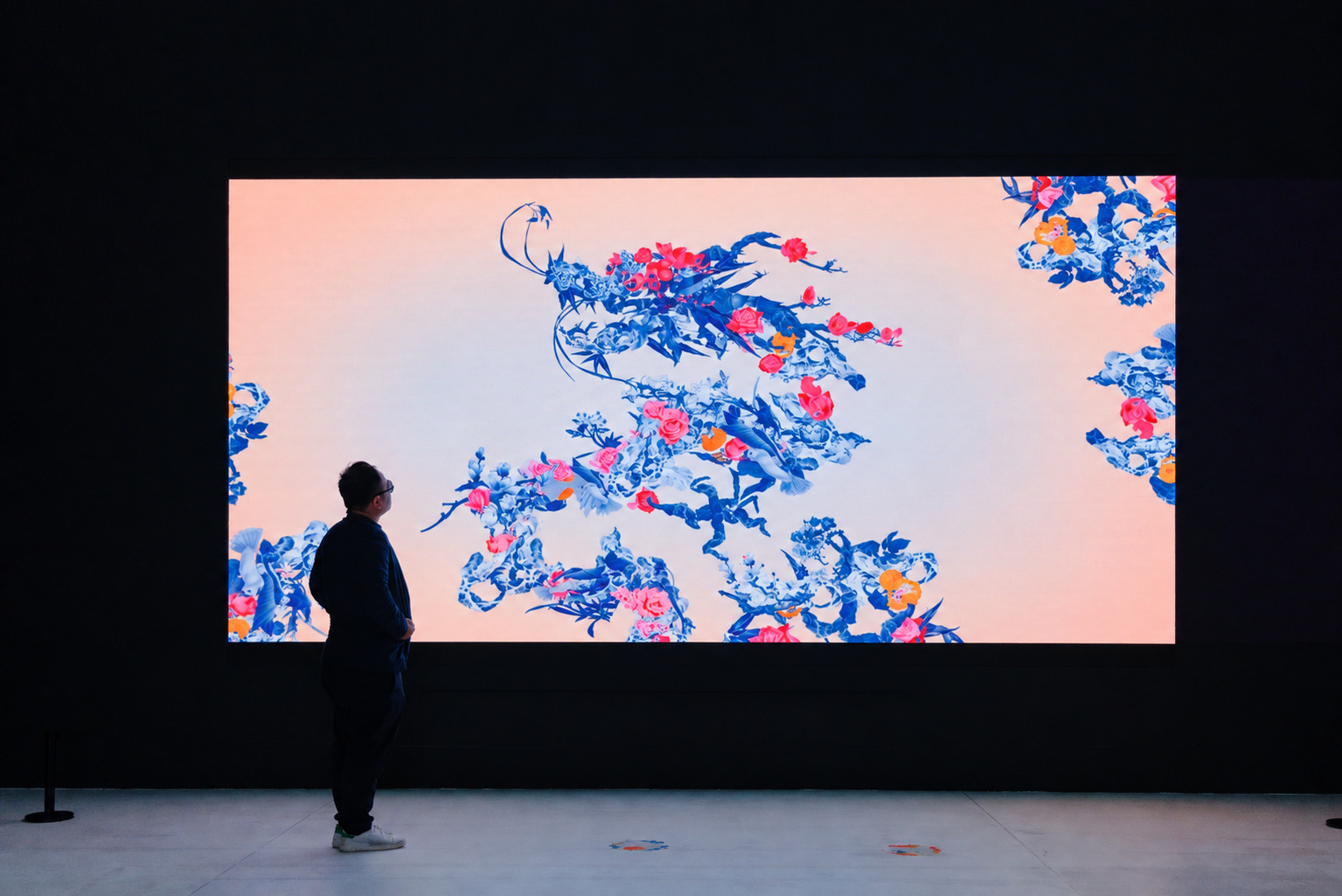
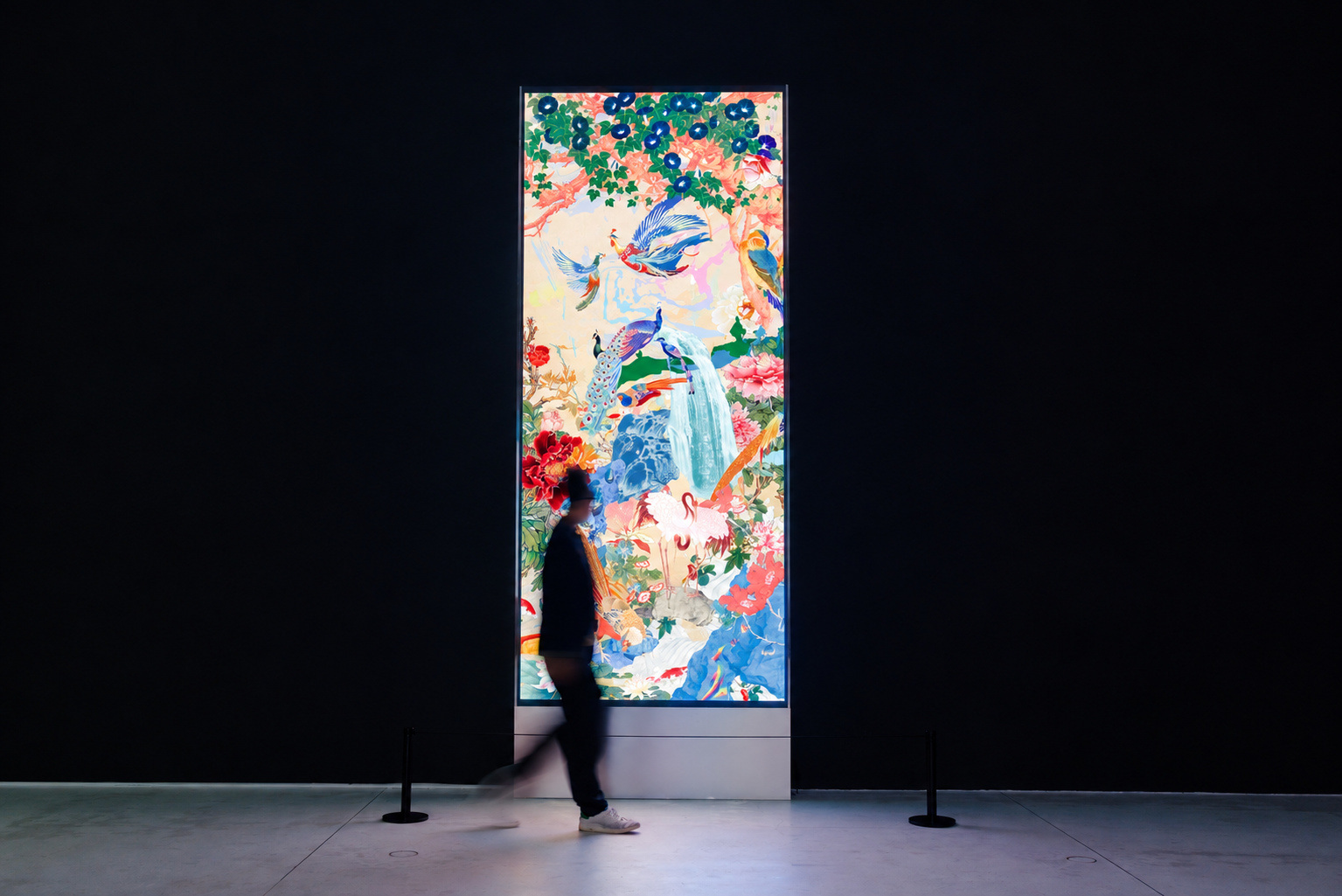
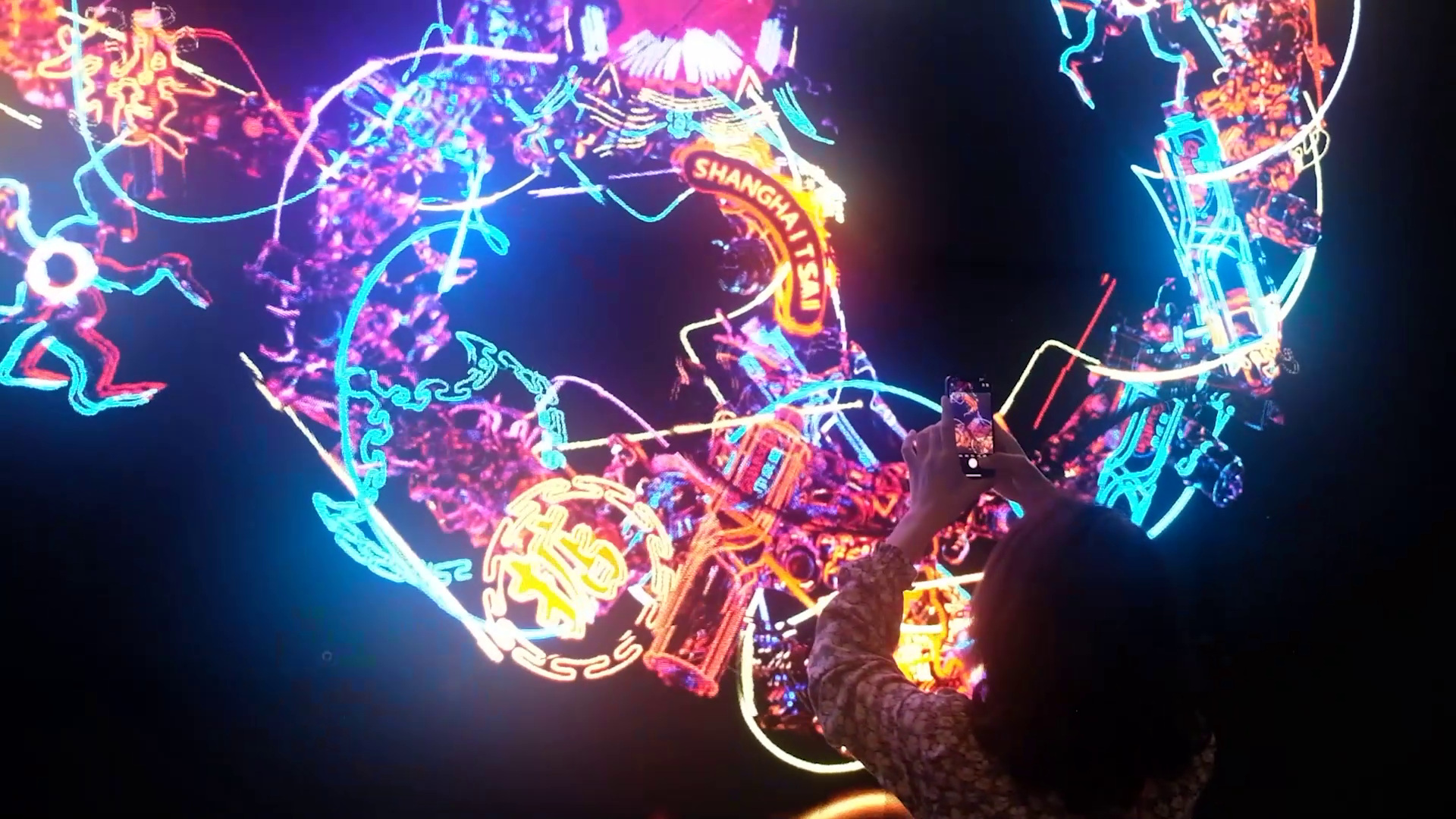
Digital art is both a point of departure and a return in Tsai’s practice: many of his paintings and crafted works begin as digital compositions. Here, images moved between past, present and future, becoming animated, luminous and responsive. In Floral Dragon, the dragon followed visitors’ positions; when three participants stood on the designated markers together, they triggered a performance. The viewer’s presence became part of the work.
Explore Bitcoin — Buddha, Venus and Guan Yu →
02 — Cultural Concord
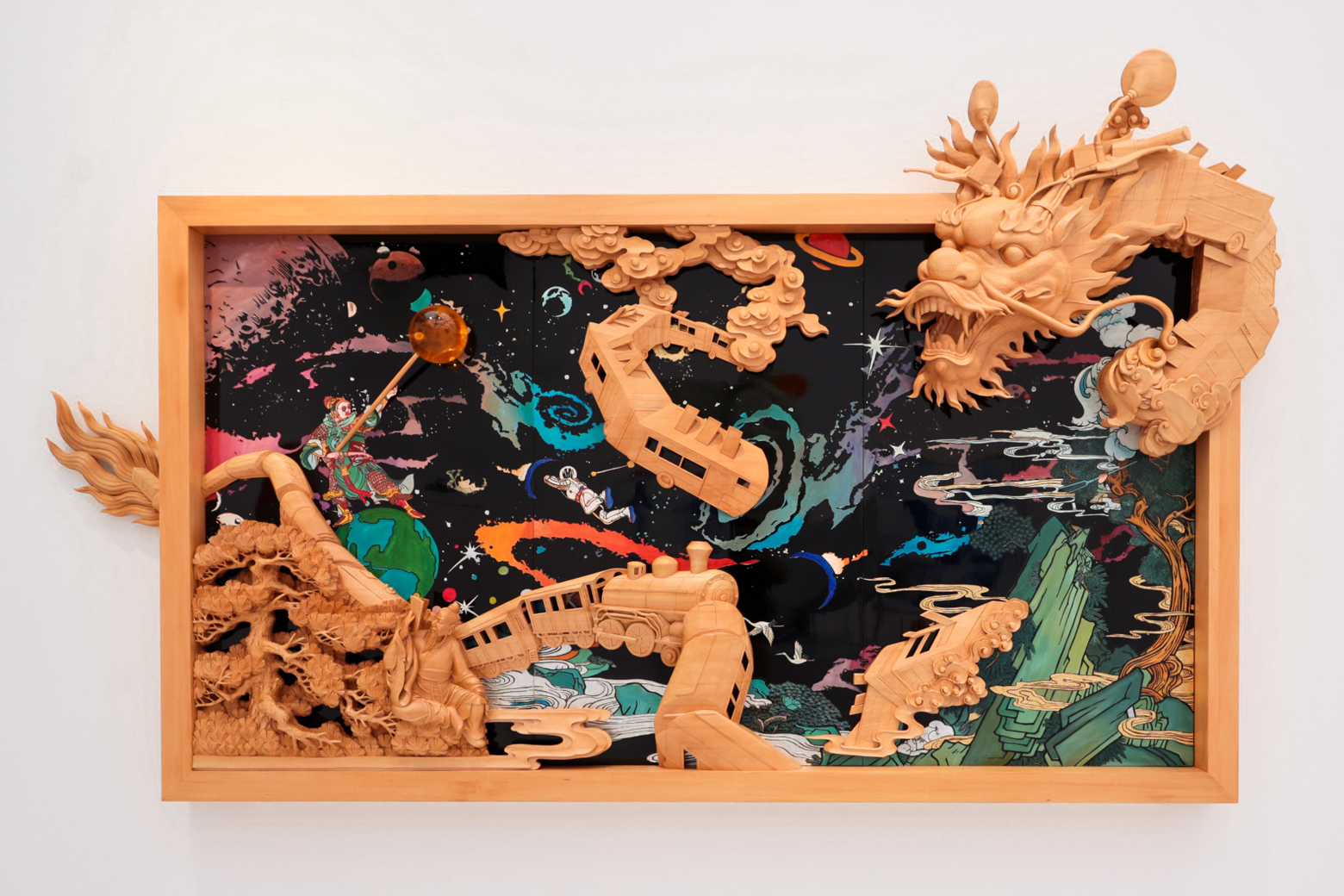
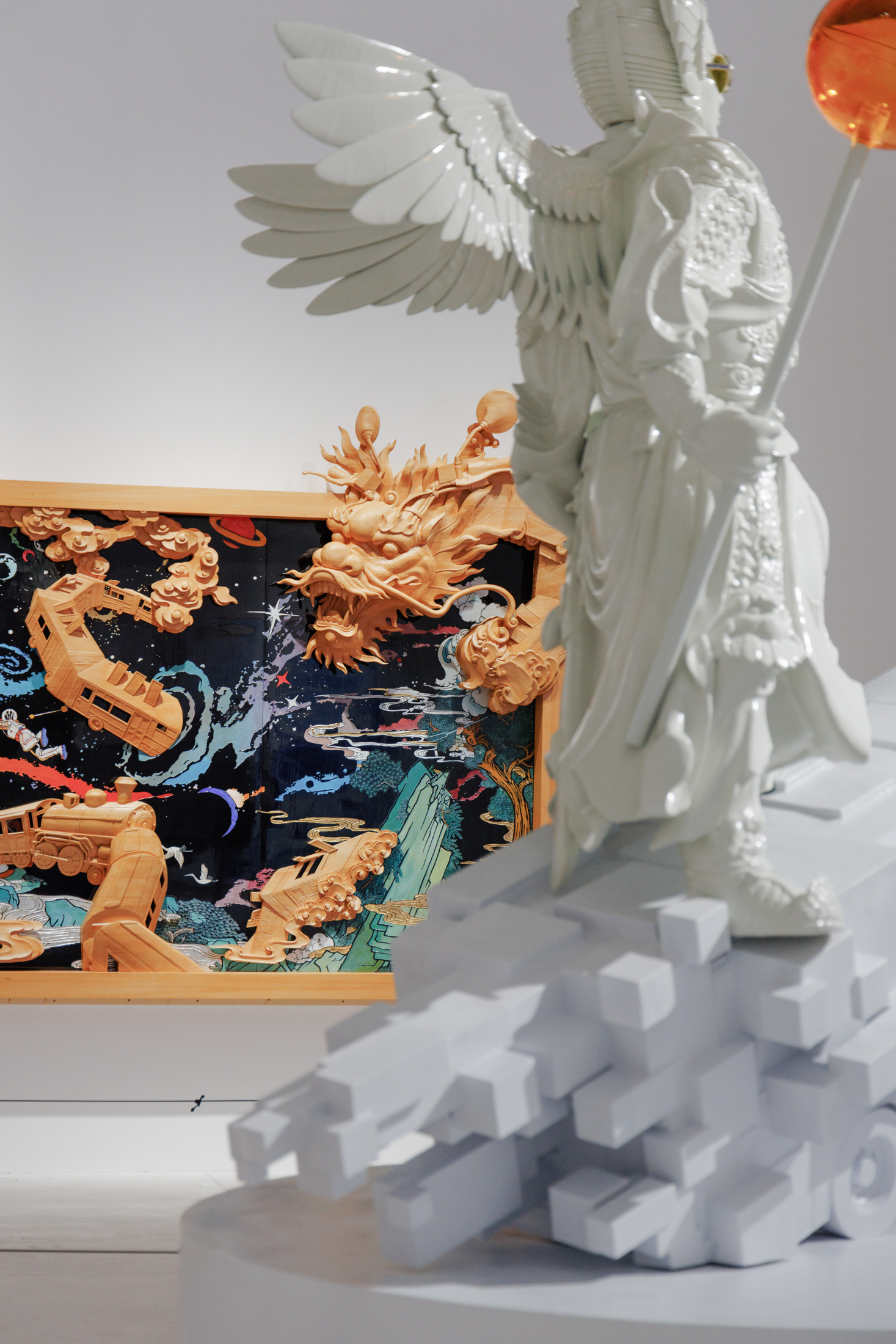
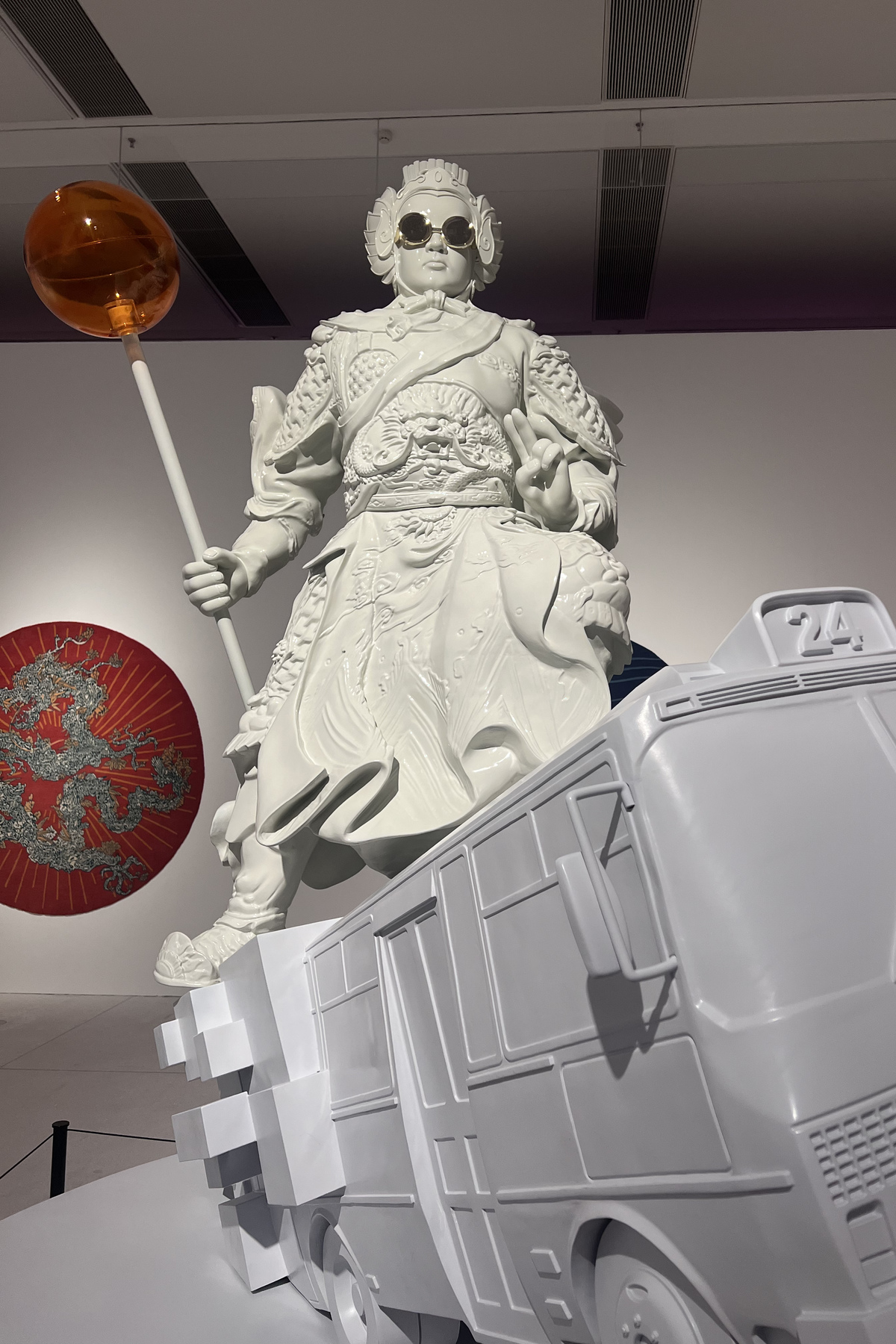
Traditional Chinese imagery and craftsmanship met the theatrical language of Western Pop Art, reflecting Tsai’s experience of moving between cultures. In Civilization, lacquer carving and wood carving shared a single picture plane: a dragon and a train carried the story of technological and cultural change across time. Sculptural interventions extended this conversation beyond the frame, turning cultural exchange into a physical encounter in the gallery.
03 — A Journey Beyond
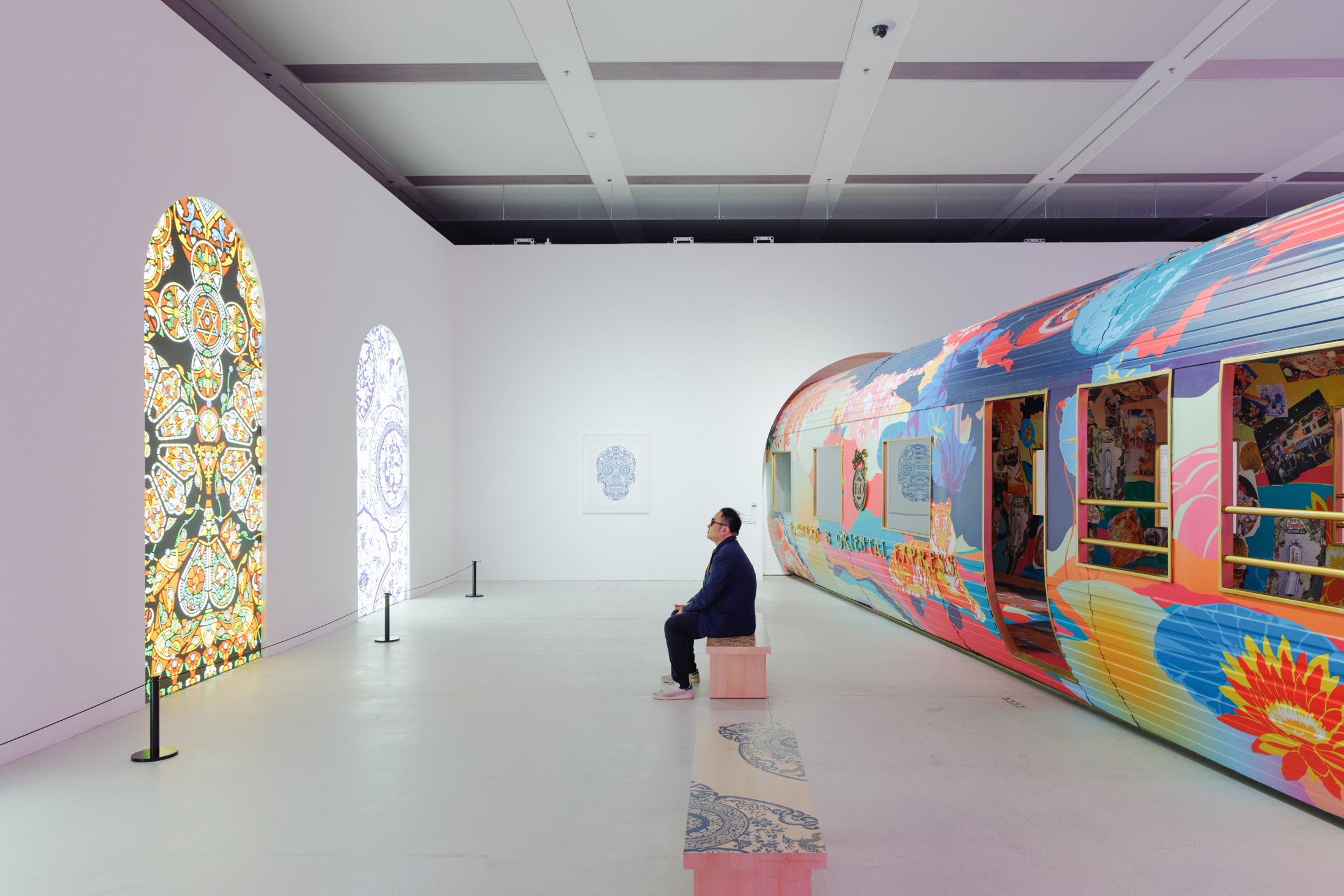
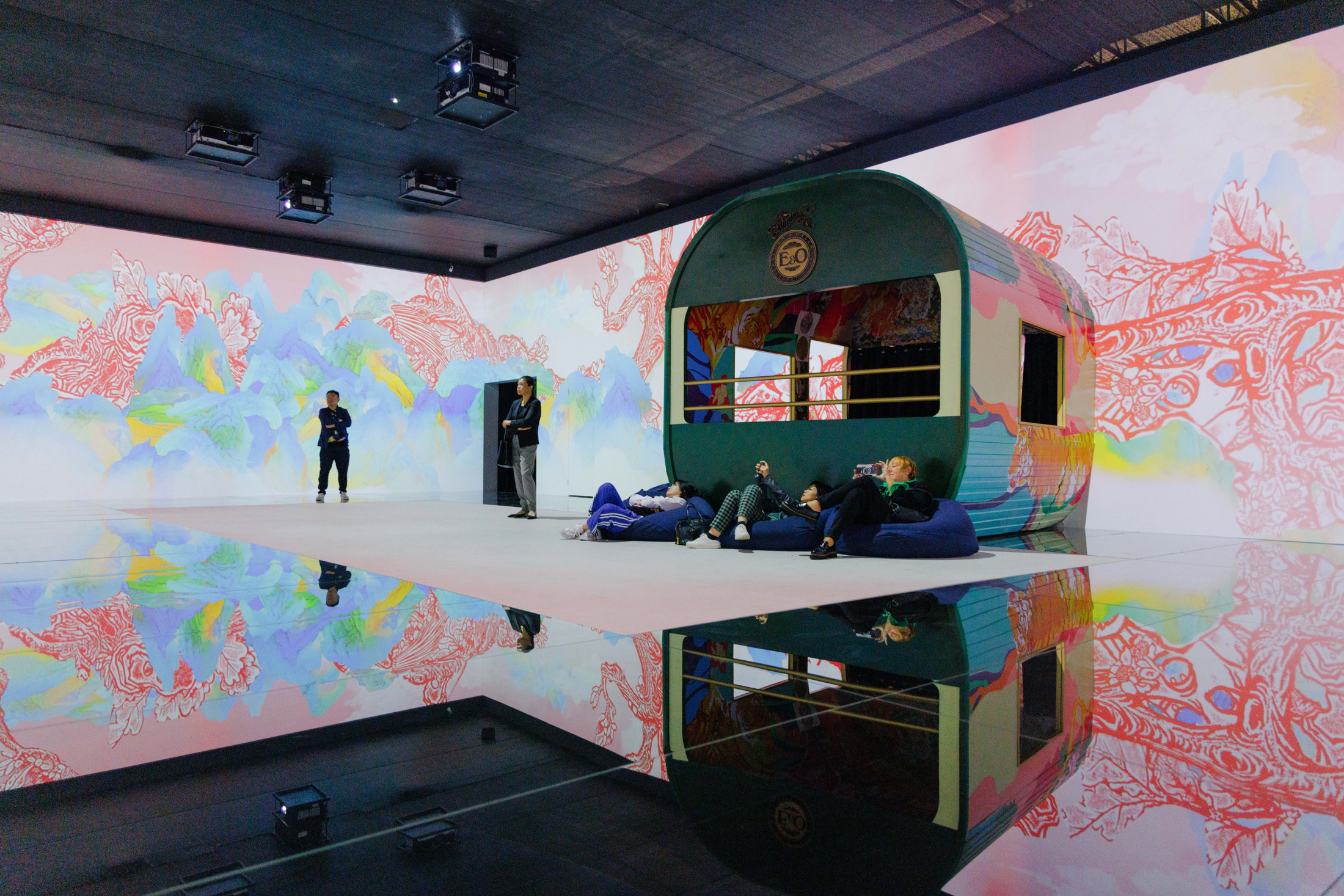
A recreation of the Tiger Express brought Tsai’s 2019 artwork for the Eastern & Oriental Express, created with Save Wild Tigers, into the museum. A virtual platform unfolded along one side, while visitors could walk through the carriage into an immersive environment beyond. The locomotive’s front had already entered this space, turning the train itself into a passage between the physical and the imagined.
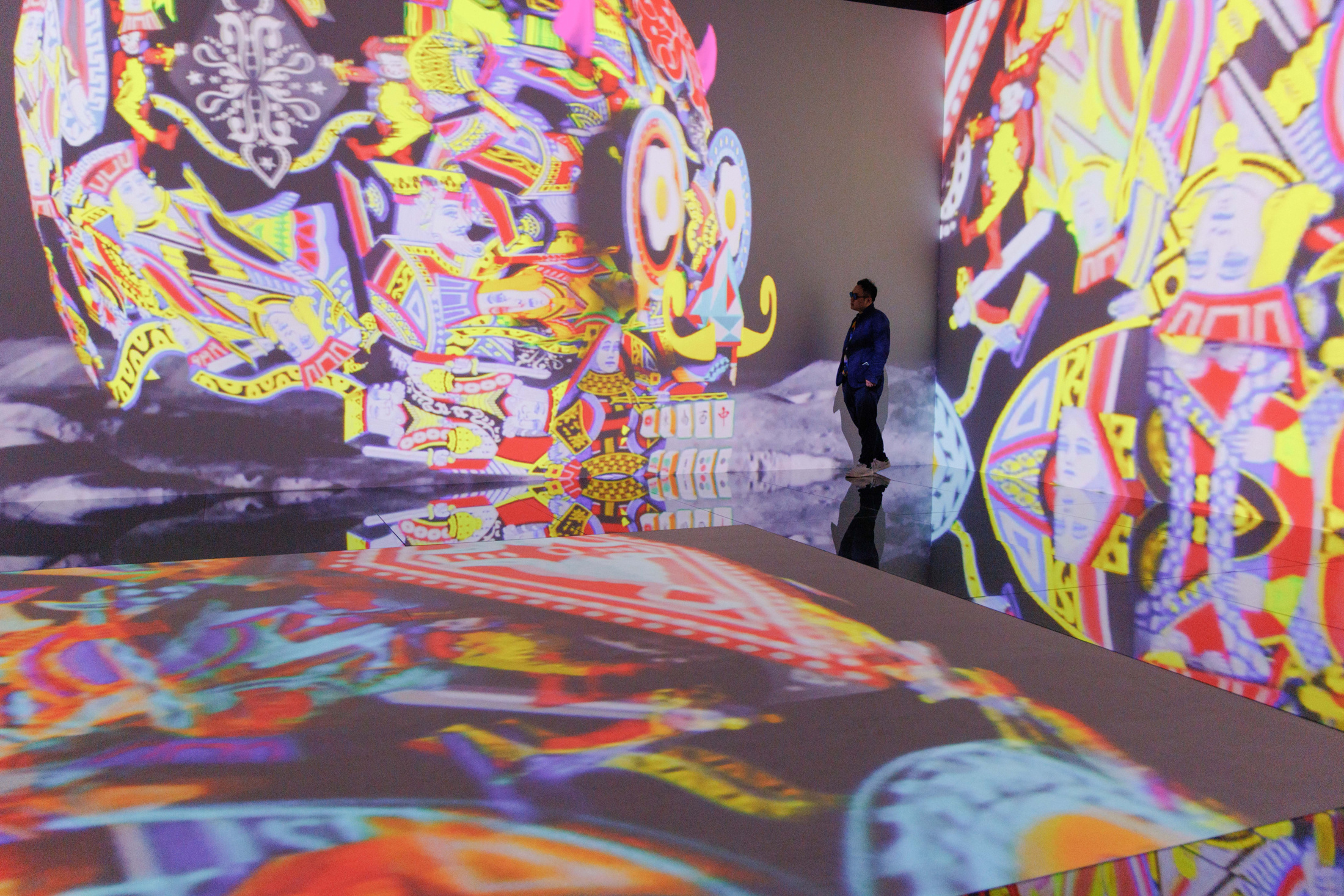
Inside, moving images and reflections brought nearly two decades of Tsai’s visual worlds to life, accompanied by a specially selected soundtrack featuring music by Ryuichi Sakamoto and Jay Chou, used with permission.
04 — The Rebirth of Images
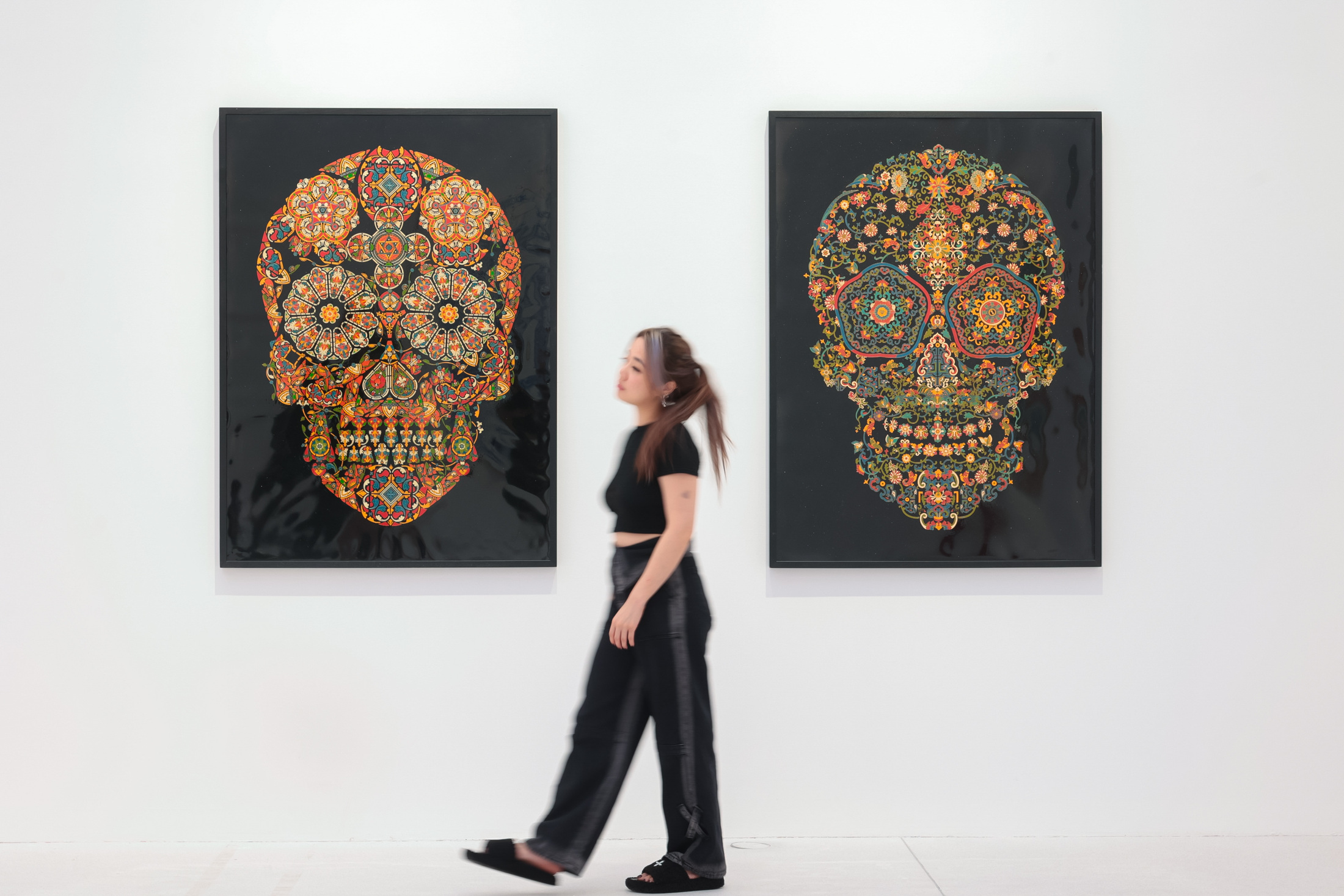
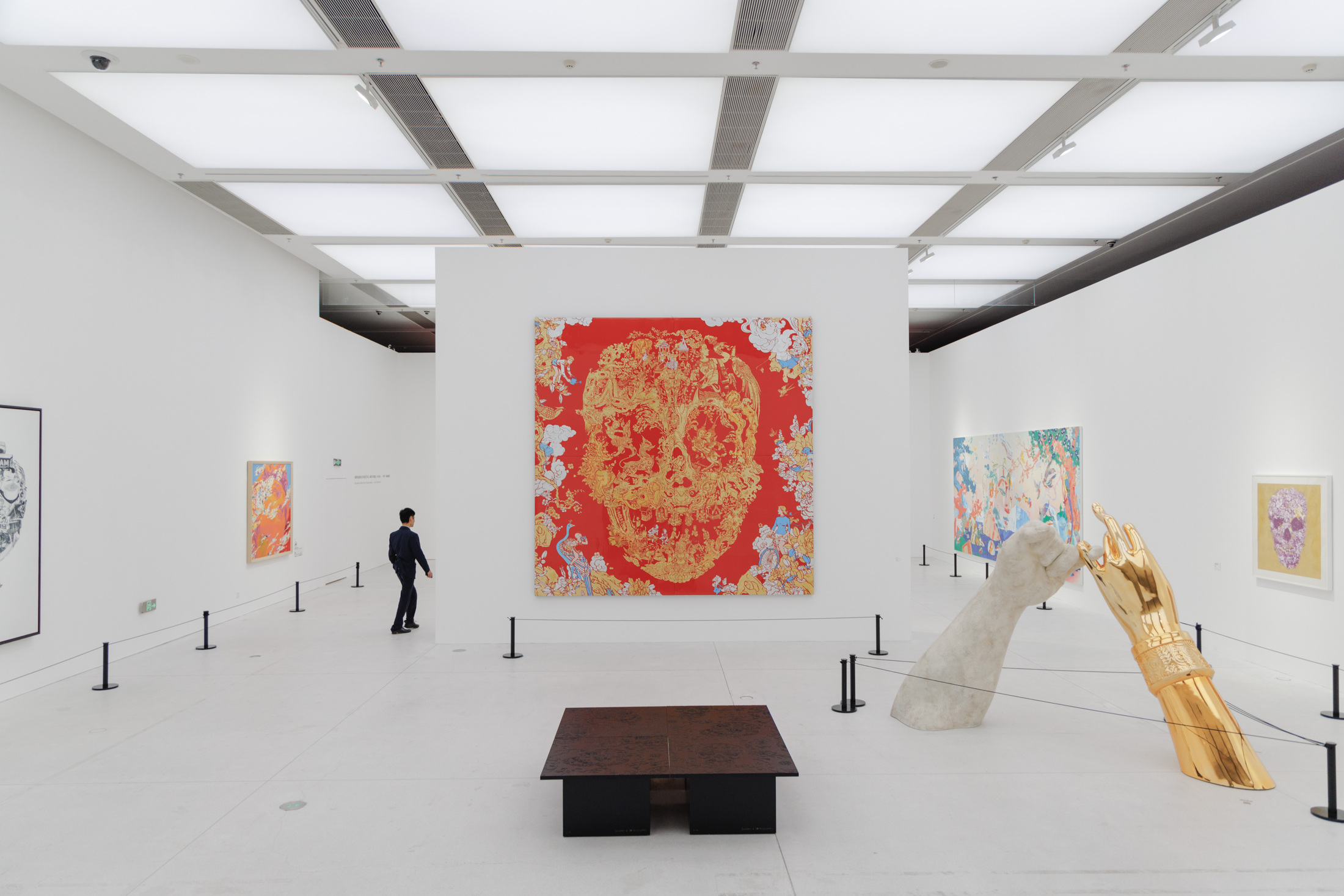
Images from history, popular culture and everyday life were reassembled into new visual narratives. Through quotation, humour and unexpected encounters, familiar motifs acquired different meanings. Tsai’s floral skulls gave this process a recurring form: the skull became a vessel for growth and renewal, holding the tension between mortality and the continuing vitality of nature. Rebirth was expressed through the transformation of images as much as through their subject matter.
05 — Chinese Illusions
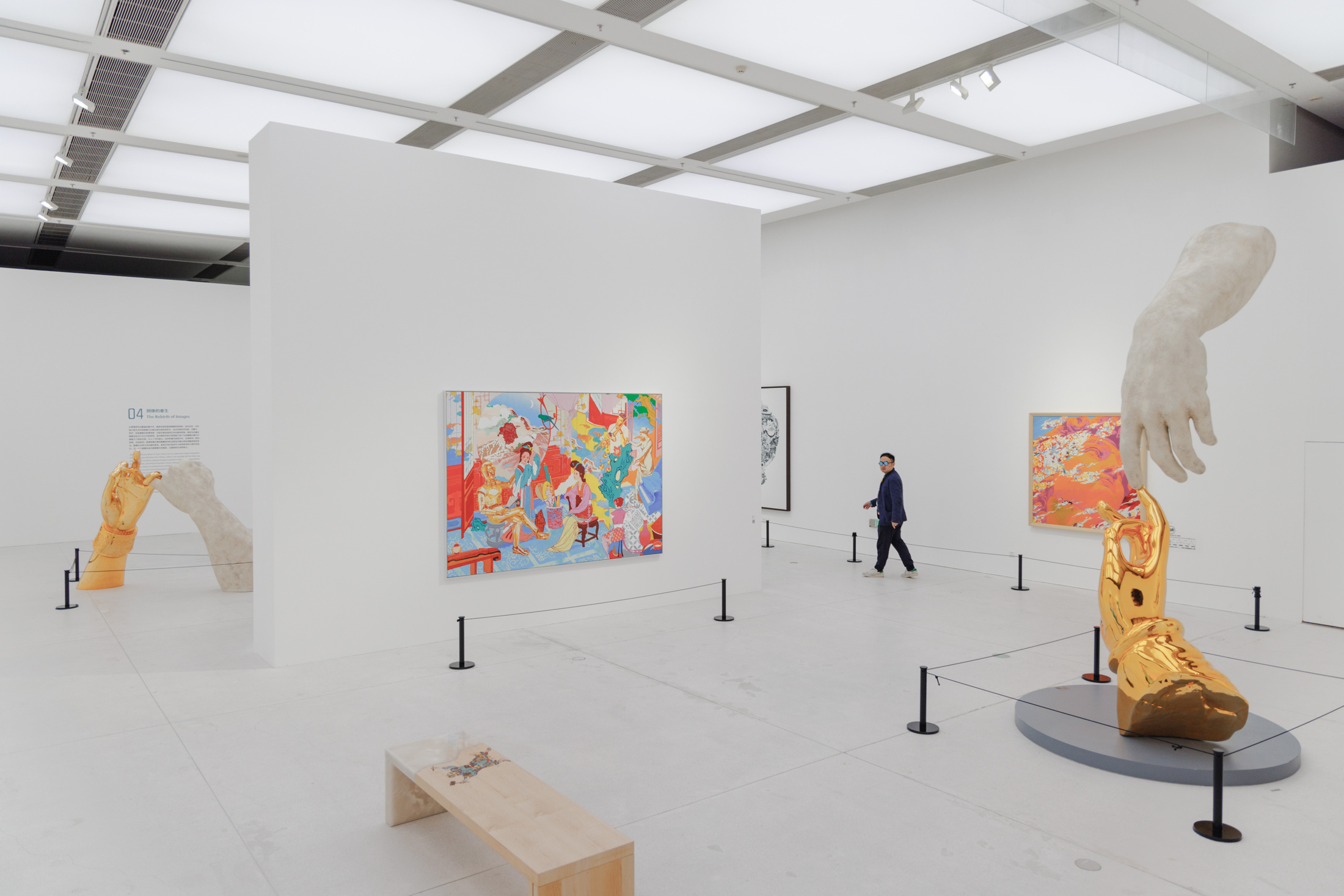
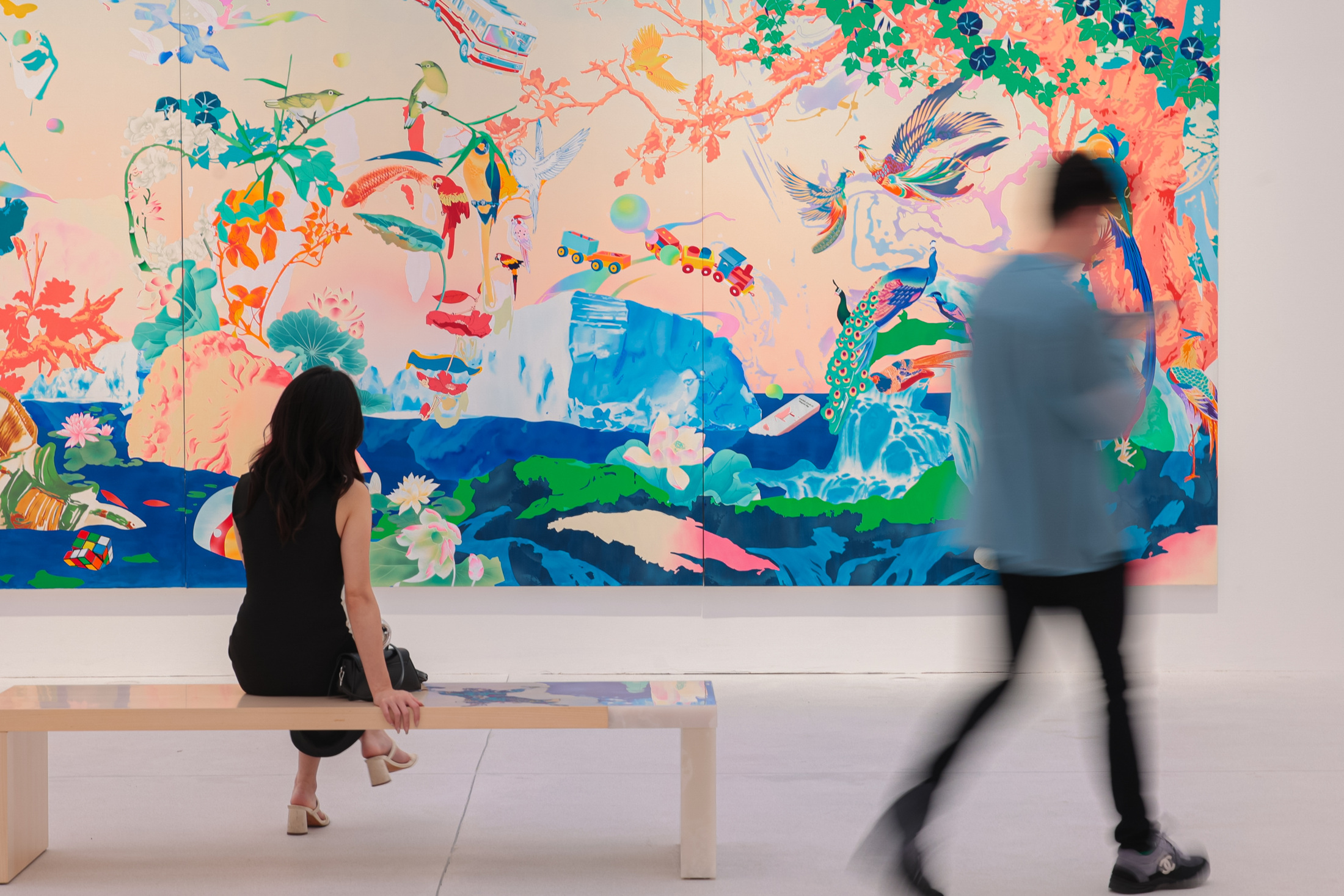
From a distance, separate flowers, birds and landscapes resolved into recognisable faces; close up, the larger image dissolved back into its individual parts. Combining optical illusion with Chinese visual traditions, these works made perception an active part of the exhibition. What appeared depended on where—and how—the viewer looked. The space between the hidden image and its discovery gave “None” a tangible role: meaning emerged through the act of seeing.
06 — Parody of Jay’s Music
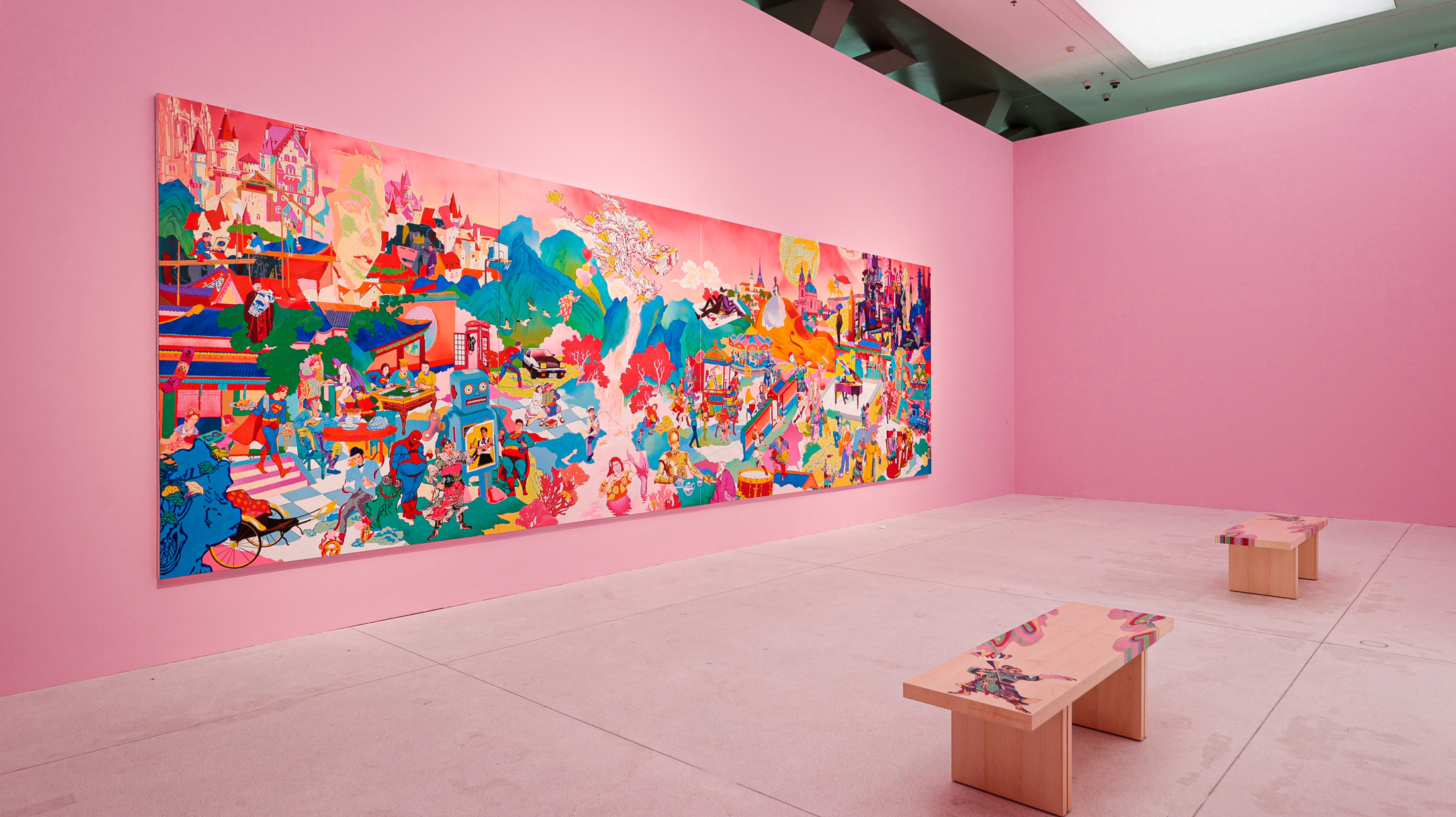
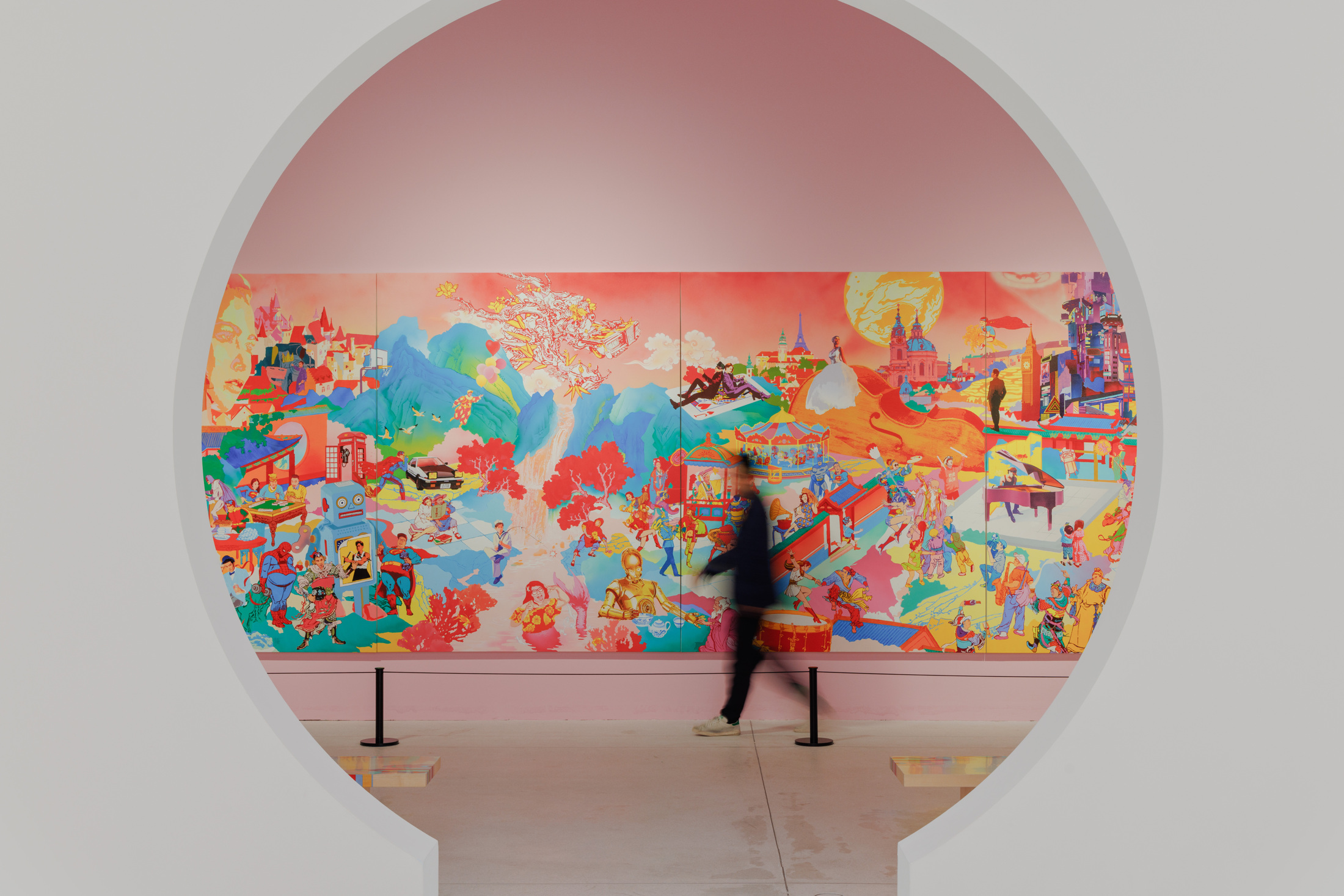
Commissioned by Jay Chou, the eight-metre-long painting Parody of Jay’s Music translated moments from the musician’s career into Tsai’s densely layered pictorial language. Music, memory and visual storytelling met across a single panoramic canvas, while augmented reality extended the image beyond its physical surface. Seen through the gallery’s circular opening and across its pink-walled setting, the work offered both an intimate encounter and a sense of its extraordinary scale.
Explore Parody of Jay’s Music →
07 — Art of the Future
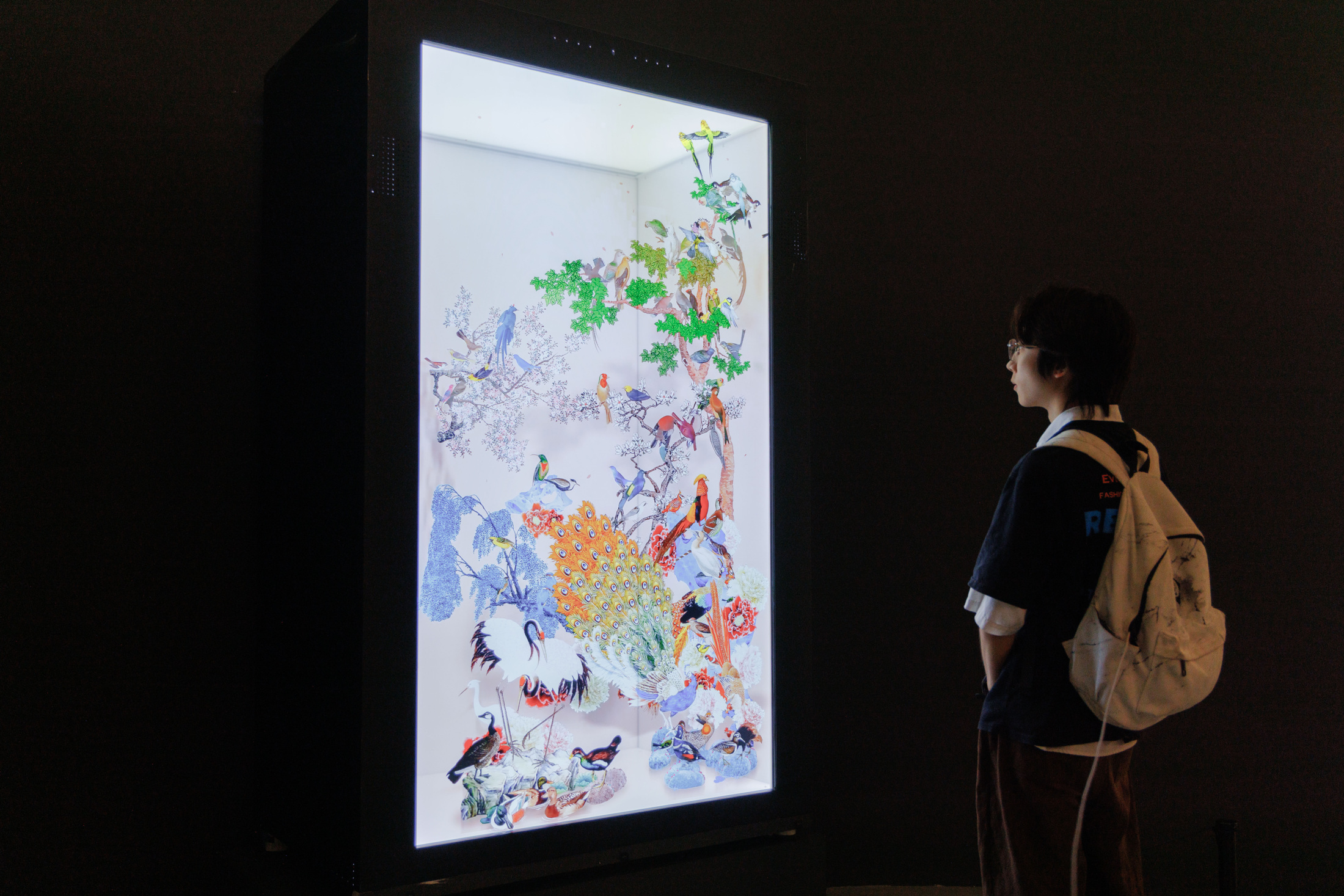
The final chapter returned to the viewer’s relationship with digital images. Interactive works brought Chinese illusion into a changing, responsive form, asking how technology might reshape perception and participation. Animals and plants remained central to these imagined futures, connecting technological possibility to the living world we share. The exhibition closed with an open proposition: art can continue to evolve through encounters between people, images and their environment.
Immersive space production: MMM Studio
Animation: Future Power Station