Art Facial Intelligence — Chengdu Biennale
From hidden imagery to generative portraiture — Chengdu Art Museum, 2026
08th Feb 2026
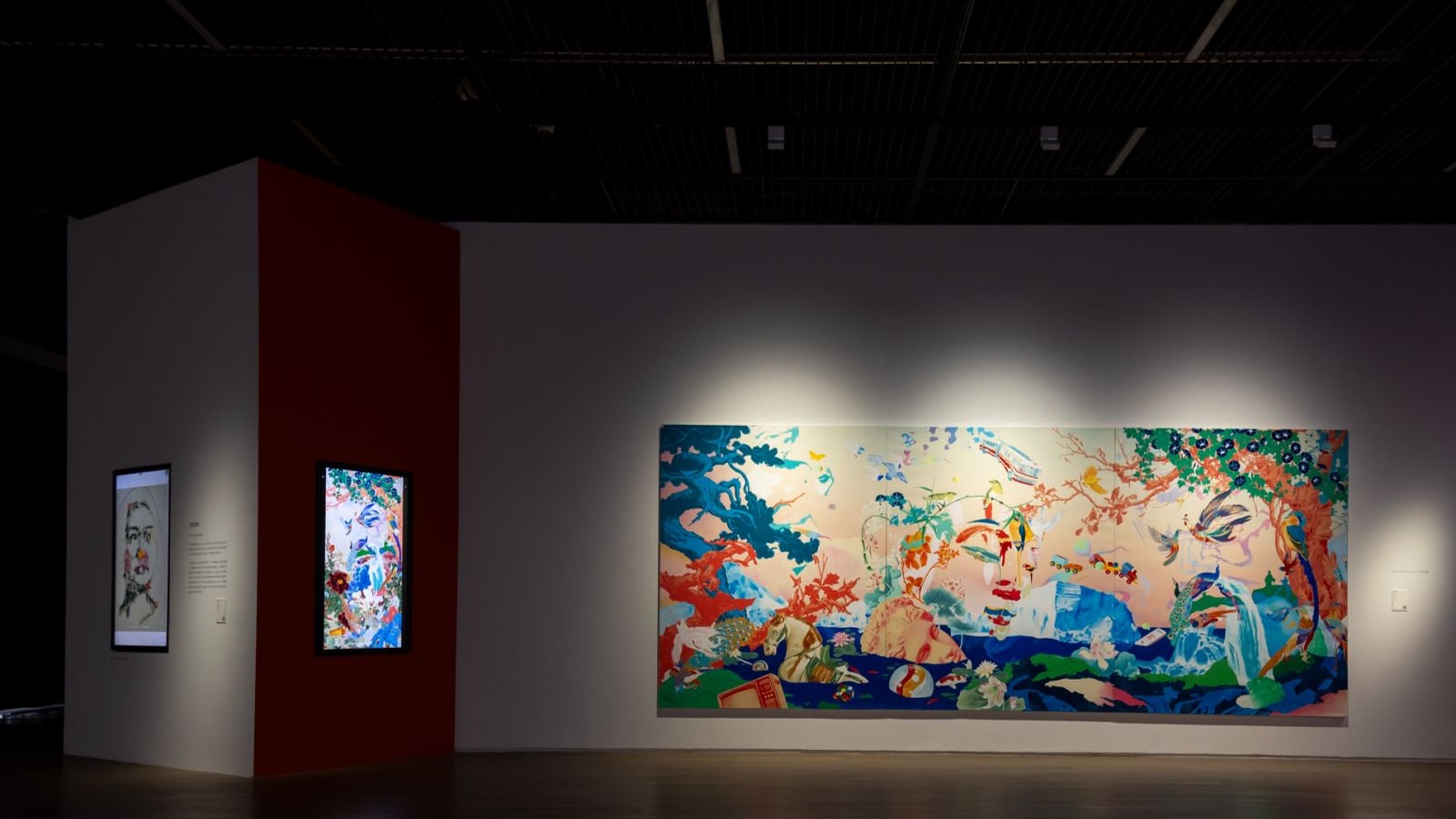
At the 2026 Chengdu Biennale, Jacky Tsai brought together three stages of an evolving artistic enquiry: a monumental painting, a programmable digital artwork and an experimental series of AI-generated portraits. Presented within the group exhibition 烟火指数 at Chengdu Art Museum, the installation traced how a single visual language could move from the canvas into animation and, finally, into the human face.
The title Art Facial Intelligence —《艺脸智慧》— plays on “artificial intelligence”. It shifts attention towards the face and towards the artist’s judgement: what happens when a recognisable portrait is assembled through birds, flowers, foliage and the spaces between them?
01 / PAINTING
A picture within a picture
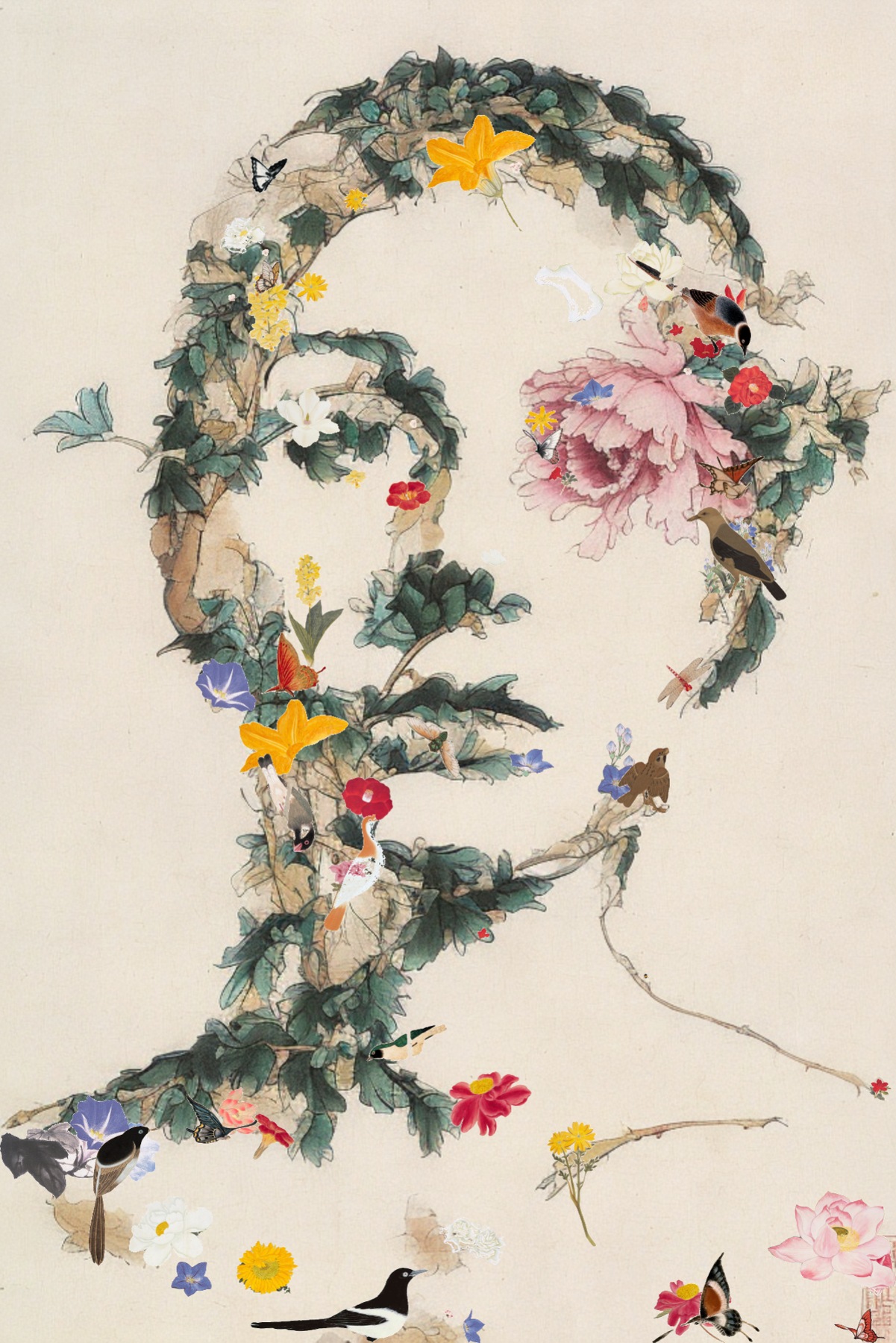
The starting point is A Hundred Birds Paying Homage to the Phoenix (2022), a six-metre-wide acrylic painting. Its abundance of birds, flowers and landscape carries a second image: concealed figures of Guan Yu and Guanyin emerge through the relationship between positive and negative space.
Drawing on the visual ambiguity associated with Salvador Dalí’s double images, Tsai invites the viewer to alternate between two readings. What appears to be a bird-and-flower composition also becomes a face or figure; neither reading completely replaces the other. This act of looking — discovering an image within another image — provides the foundation for the later works.
02 / PROGRAMMABLE DIGITAL ART
Bitcoin — Buddha, Venus and Guan Yu
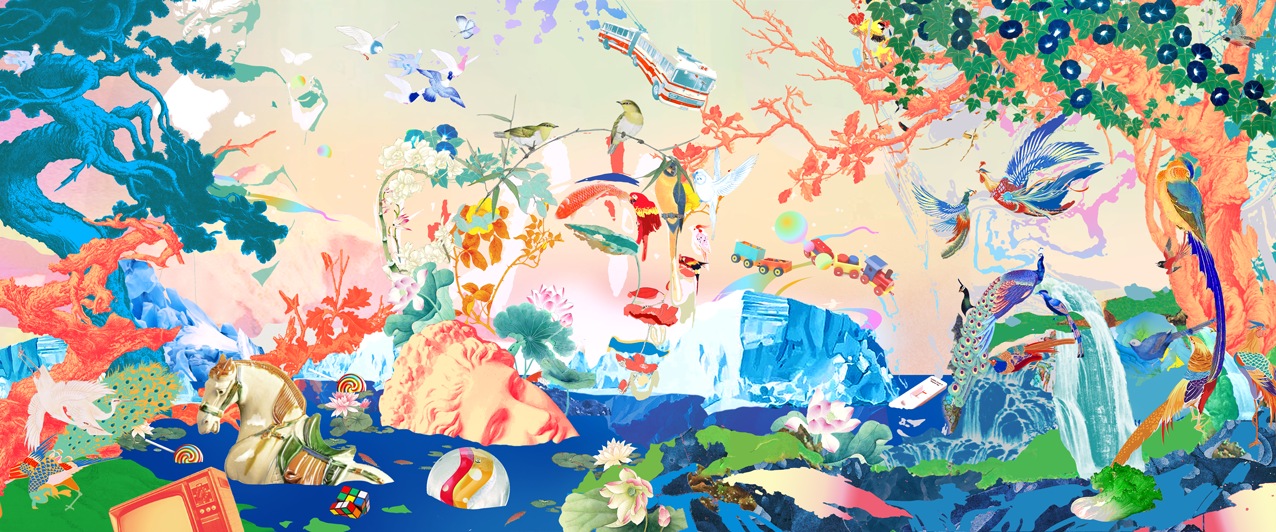
In Bitcoin — Buddha, Venus and Guan Yu (2022), the hidden-image principle becomes a programmable digital artwork that changes in real time with movements in the Bitcoin market. The three figures emerge in response to different market conditions, giving the composition an unpredictable relationship with the world beyond the screen.
When Bitcoin rises strongly, Guan Yu appears: the warrior figure brings a sense of strength, confidence and momentum. When the market is relatively calm, Venus comes into view, suggesting beauty, stillness and equilibrium. When Bitcoin falls sharply, the image turns towards Buddha — a playful acknowledgement of the moment when confidence gives way to the wish to visit a temple, burn incense and seek reassurance.
Through this humorous correspondence, market movements become a reflection of human responses to uncertainty: courage in an upswing, composure in calmer times, and a search for spiritual comfort when fortunes decline. Chinese and Western figures inhabit the same changing pictorial world, linking financial volatility with the emotional rises and falls of everyday life.
A screen at the biennale presented this digital stage beside the original canvas. What the painting asks viewers to discover through looking is now revealed through time, data and transformation.
03 / AI PORTRAIT EXPERIMENT
From concealed figures to individual faces
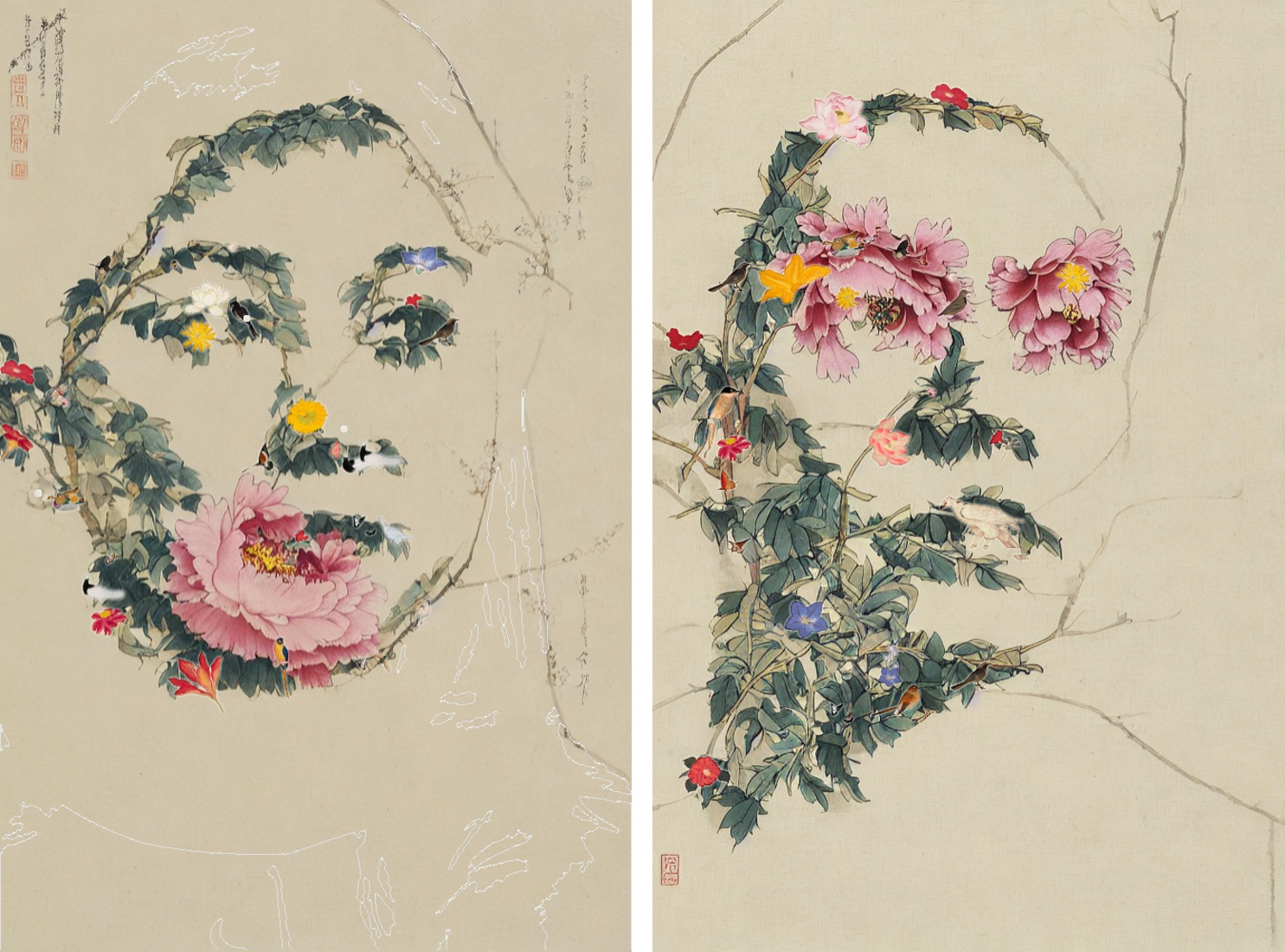
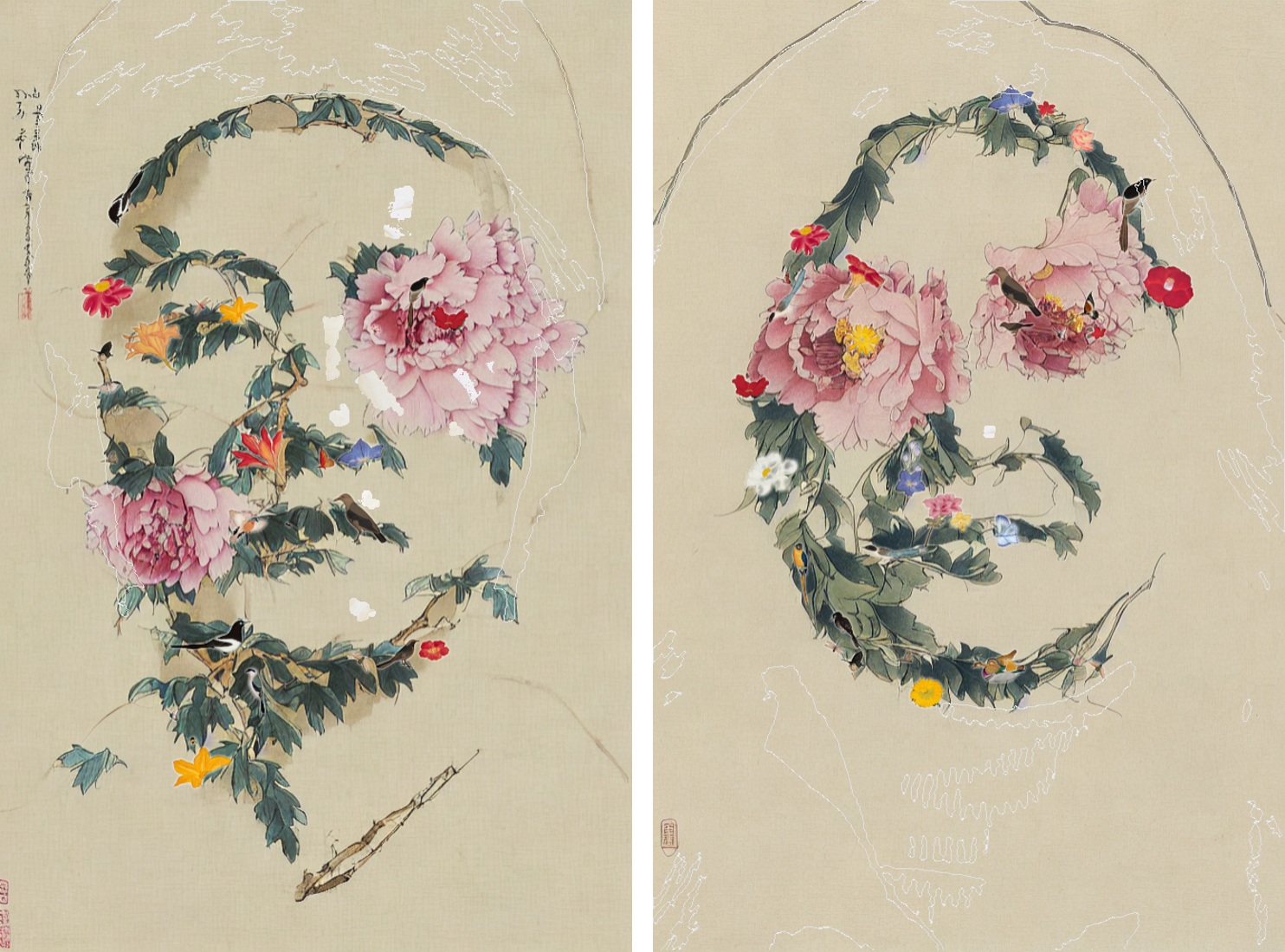
For Art Facial Intelligence, Tsai worked with CreateAI to explore whether his visual language could be extended into generated portraiture. Using a model developed around his visual language, the system generates portraits in real time from photographic inputs. Facial likeness and a bird-and-flower composition are asked to emerge together, creating a meeting between individual identity and the artist’s imagery.
An early portrait study established a demanding visual reference. Photographs subsequently contributed by volunteers in Chengdu became the starting points for further experiments. The artist selected approximately thirty portraits for presentation in a repeating screen sequence at the biennale.
These works emerge from a sustained collaboration between artist and AI. The system produces possibilities; Tsai compares, evaluates and selects the outcomes according to his own artistic judgement. His role extends from shaping the visual direction to deciding which generated images can become part of the work. The approximately thirty selected portraits were shown as a continuous sequence, bringing this process of real-time generation and artistic selection into the exhibition.
One enquiry, three forms
Seen together, the three stages offer a record of continuity as well as change. In the painting, a figure waits to be discovered. In the digital work, the image changes over time. In the AI portraits, that visual logic is tested against the particular features of another person.
The Chengdu presentation brings these stages into one space, allowing the viewer to follow the evolution of the work rather than encounter AI as an isolated technique.
Exhibition: 烟火指数·成都双年展, Chengdu Art Museum
Dates: 8 February–23 August 2026
Presentation: Group exhibition; painting, digital artwork and selected AI-generated portrait sequence
AI collaboration: CreateAI
Original painting ↗ · Digital work ↗
Biennale opening report — Xinhua ↗